Options Mall · Business shirts near Andheri · Vile Parle West, Mumbai

The 9-to-9 09:00 The business day, dressed +91 8369381345

All stops 01—12

+91 8369381345 optionsclothingmumbai@gmail.com

10 / 12 · Businesswear Journal

The 9-to-9 Wardrobe · Reading room Issue of twelve essays Six departments ≈ 40 min · 7100+ words

The Businesswear Journal

Twelve long-form articles on business shirts: where they came from, how they fit, what they are woven from, how to combine them and how to look after them. Written as a working reference for anyone choosing office shirts, from a first job to a well-established wardrobe, presented by Options Mall in Vile Parle West, close to Andheri.

  • 2History
  • 3Style
  • 2Fit
  • 2Fabric
  • 2Wardrobe
  • 1Care

Index Contents of this issue

In this issue

Filter by department

12 shown

  1. 01 The Evolution of Business Shirts From hidden linen undergarment to the centrepiece of office dress: how the shirt moved from beneath the clothes to the front of professional life. History4 min
  2. 02 Understanding Modern Businesswear Dress codes have loosened, multiplied and moved online. The business shirt is the one garment that holds them together. History4 min
  3. 03 How to Choose the Right Business Shirt Seven decisions, made in the right order, take the guesswork out of buying a shirt you will actually wear. Fit4 min
  4. 04 Understanding Formal and Business Shirt Fits Slim, regular, tailored, relaxed: what the labels mean, how a shirt is shaped, and how to test a fit in under a minute. Fit3 min
  5. 05 A Guide to Business Shirt Collars The collar frames the face and sets the formality of the whole outfit. Here is how the main styles differ and when to wear each. Style3 min
  6. 06 Understanding Shirting Fabrics Fibre, yarn, weave and finish: the four layers that decide how a shirt feels, breathes, creases and lasts. Fabric3 min
  7. 07 Poplin, Twill and Oxford: The Difference Three weaves account for most business shirts. They look similar from across a room and behave very differently up close. Fabric4 min
  8. 08 Building a Versatile Office Wardrobe A handful of well-chosen shirts and trousers, planned together, produces more good outfits than a full wardrobe bought piece by piece. Wardrobe3 min
  9. 09 Business Shirt and Trouser Combinations Contrast, formality and texture: three principles that make shirt and trouser pairings work, with combinations you can wear tomorrow. Wardrobe3 min
  10. 10 Understanding Colour Coordination Value, undertone, pattern scale: the working principles behind shirt, tie and trouser colours that look right together. Style3 min
  11. 11 The Details That Define a Well-Constructed Shirt Stitch density, seams, interlining, buttons and pattern matching: what to look for when judging quality up close. Style3 min
  12. 12 Caring for Business Shirts Washing, drying, ironing and storing: a practical routine that keeps collars crisp, colours clear and shirts in rotation for longer. Care3 min

No. 01History4 min read

The Evolution of Business Shirts

From hidden linen undergarment to the centrepiece of office dress: how the shirt moved from beneath the clothes to the front of professional life.

For most of its long history the shirt was not meant to be seen. It was a layer worn next to the skin, beneath doublets, waistcoats and coats, and its main job was practical: to absorb sweat and protect expensive outer garments that could not easily be washed. The story of the business shirt is the story of that hidden garment gradually moving into view until, by the late twentieth century, it could stand on its own as the principal item of men's workwear.

An undergarment with a public edge

Early shirts were typically made of linen, cut from simple rectangles and pulled on over the head. Only the collar and the cuffs showed beyond the outer clothing, so those edges carried the shirt's social meaning. Clean, white linen at the neck and wrist was widely read as a sign that the wearer could afford frequent laundering and did not do dirty manual work. That association between a fresh white collar and respectable occupation would prove remarkably durable.

The age of the detachable collar

During the nineteenth century the detachable collar became common. Collars and cuffs soiled faster than the body of the shirt, so making them separate pieces, fastened with studs, allowed a man to change them daily while wearing the shirt itself for longer. Their manufacture is often traced to Troy, New York, which became known as a centre of collar making. These collars were heavily starched and often tall and stiff; later versions were made of coated or celluloid materials that could be wiped clean. Shapes varied from upright wing collars to turned-down styles that are recognisable ancestors of today's point collar.

Opening the front

Most shirts were still pullovers with a partial opening at the chest. The coat-style shirt, buttoning all the way down the front like a coat, appeared in the second half of the nineteenth century and gradually became the standard construction during the twentieth. It was easier to put on, easier to iron and easier to fit, and it gave us the full front placket that every modern office shirt still uses.

The attached collar takes over

In the early decades of the twentieth century, softer, attached collars gained acceptance, first for leisure and then, steadily, for work. Interlinings and fusing techniques later allowed an attached collar to hold a crisp shape without heavy starch. The button-down collar, associated with sporting dress, was adopted by shirtmakers and settled into a more relaxed corner of business dress. Coloured shirts and stripes also became more accepted, although white remained the formal default for much of the century.

New fibres and easy care

After the Second World War, synthetic fibres and polyester-cotton blends promised shirts that needed less ironing. Ready-to-wear sizing by collar and sleeve measurements made shirts widely available off the rack. The business shirt became an everyday, mass-produced garment rather than a tailored or semi-tailored item.

Business casual and the modern office

From the late twentieth century, many workplaces relaxed their dress codes. The tie became optional in many offices, and button-down Oxfords, open collars and chinos entered working life under the label of business casual. Into the twenty-first century, slimmer cuts, stretch blends and easy-care finishes extended the shirt's range further, so a single garment can now cover a client meeting, a long day at the desk and dinner afterwards.

What history tells today's buyer

Several old habits survive in modern formal business shirts. The collar remains the focal point, which is why it carries interlining and removable stays. White and pale blue still read as the most formal colours. And the full button front, a nineteenth-century novelty, is now so standard that we no longer notice it. Whether you are buying business shirts in Mumbai for a first job or refreshing a long-standing wardrobe, knowing where these details came from makes it easier to judge which ones still matter: a well-shaped collar, clean construction and fabric suited to the day ahead.
Back to index

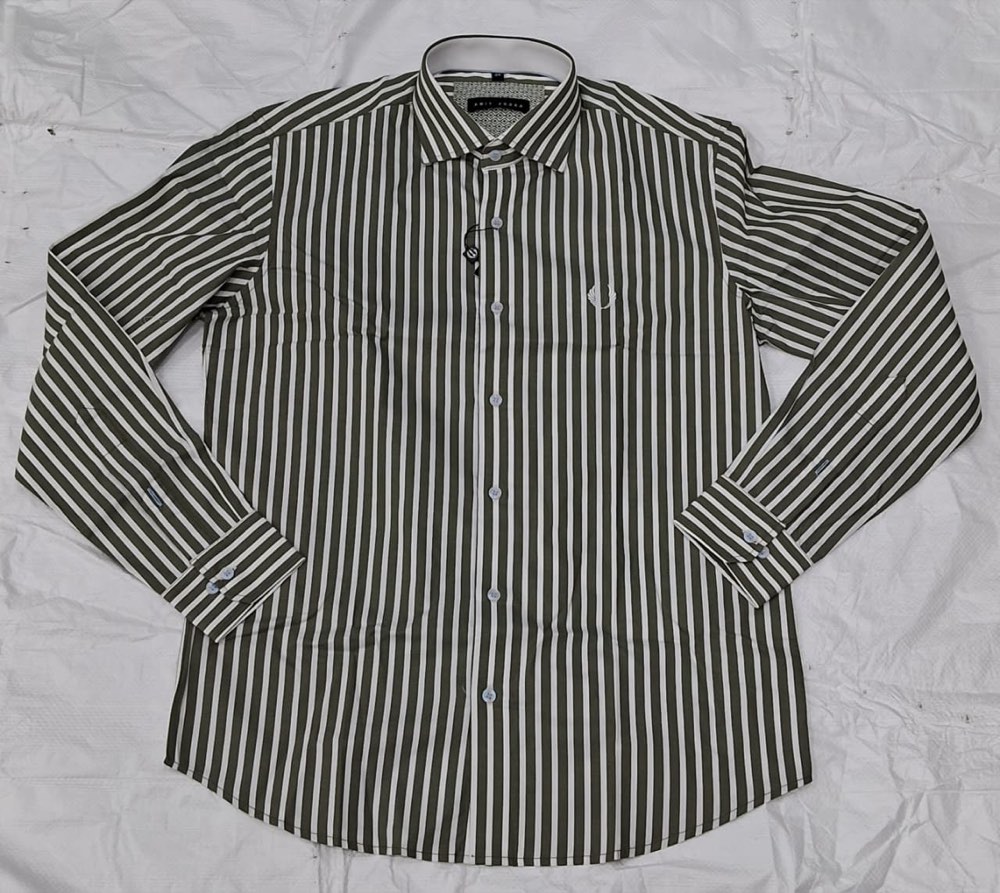
Olive and white wide-striped long-sleeve shirt laid flat, with a spread collar, white inner collar band and two-button cuffs
Fig. 01 — A bold olive-and-white stripe with a spread collar: an attached collar and full button front, both twentieth-century norms.
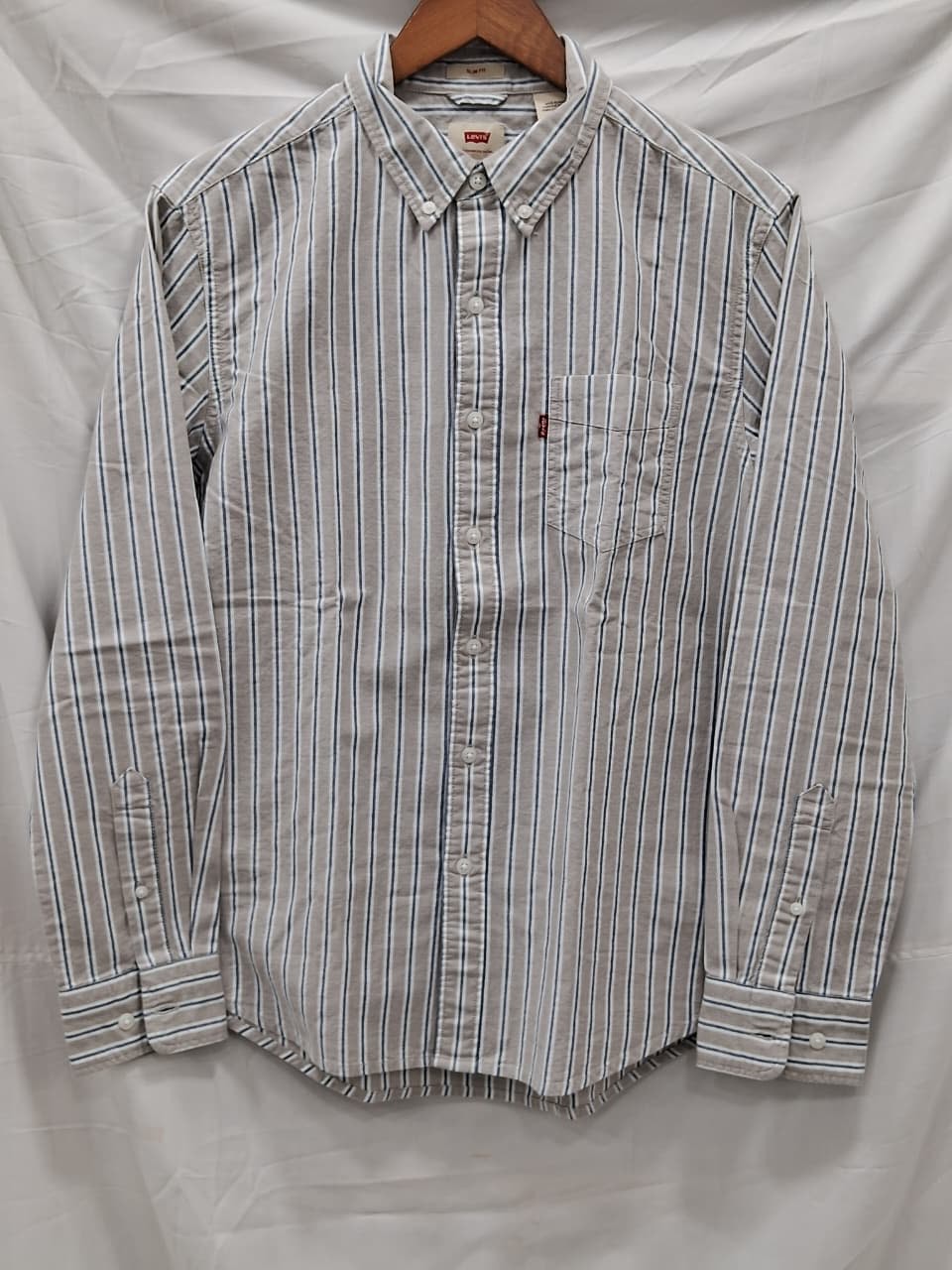
Slim-fit button-down shirt in a beige, white and navy stripe hanging on a wooden hanger, with a chest pocket and button cuffs
Fig. 02 — A button-down striped shirt with a chest pocket: the kind of shirt that moves easily between business casual and smart casual.

No. 02History4 min read

Understanding Modern Businesswear

Dress codes have loosened, multiplied and moved online. The business shirt is the one garment that holds them together.

Ask ten people what counts as office wear today and you may get ten different answers. Some workplaces still expect a suit and tie every day; others have no written dress code at all. Yet across that range one garment keeps appearing: the collared, button-front shirt. Understanding modern businesswear means understanding the spectrum of dress codes, the forces that reshaped it, and how a shirt adapts to each point along the way.

The four broad dress codes

Formal business generally means a dark suit, a plain or finely patterned shirt in white or pale blue, and a tie. Business professional allows more variety: odd jackets, subtle stripes and checks, sometimes no tie. Business casual drops the jacket and tie as requirements, admitting button-down collars, Oxford cloth and chinos. Smart casual sits at the relaxed end, where textured fabrics, softer colours and untucked shirts can appear. These labels vary from employer to employer, so treat them as a guide rather than a rule.

What changed

Several shifts combined to loosen office dress. Many industries became less hierarchical, and visible formality lost some of its importance. Video calls put the focus on the upper body, so the collar and the colour of a shirt now do much of the work a full suit once did. Hybrid working means some people dress for the office only on certain days and want clothes that work both at a desk and at home. Climate matters as well: in a humid city like Mumbai, heavy suiting is impractical for much of the year, which puts even more weight on the shirt itself.

The shirt as the constant

Because jackets and ties come and go, the shirt has become the anchor of men's workwear. A crisp collar signals intent even without a tie. A well-fitted body looks tidy whether or not a jacket covers it. And a shirt can be layered in many ways: under a knit, beneath an unstructured blazer, or worn alone with sleeves neatly rolled on a hot afternoon.

Reading a dress code in practice

Consider three typical situations. In a bank, a law office or a board meeting, formal business shirts in white or light blue poplin with a point or semi-spread collar and a tie remain the safe choice. In a creative agency or technology firm, an Oxford button-down in a subtle stripe, worn with chinos and no tie, usually fits the culture. On a day that mixes desk work with a client visit, a twill shirt with a spread collar lets you add a tie and jacket for the meeting and remove both afterwards without looking underdressed.

Fabrics for the new office

Modern office shirts increasingly use blends with a small amount of stretch, easy-care finishes that reduce creasing, and lighter weaves suited to air-conditioned interiors and hot commutes. These are practical additions rather than replacements for good cotton; a breathable cotton shirt remains the most comfortable option for many people in warm weather.

Shirts for video and in-person days

On camera, very fine, high-contrast stripes or tiny checks can shimmer, an effect known as moiré. Plain colours, medium stripes and soft textures tend to look calmer on screen. In person, the same shirt should still pass close inspection, so fit and collar shape matter as much as ever.

Building for the spectrum

The most useful approach is to own shirts that can move along the scale. A white poplin and a pale blue twill cover the formal end. One or two Oxford or textured shirts handle business casual. A considered stripe or check bridges both. With that small range you can respond to almost any dress code without guessing, which is the real point of modern businesswear: being appropriate, comfortable and ready for whatever the day turns into.

Back to index

No. 03Fit4 min read

How to Choose the Right Business Shirt

Seven decisions, made in the right order, take the guesswork out of buying a shirt you will actually wear.

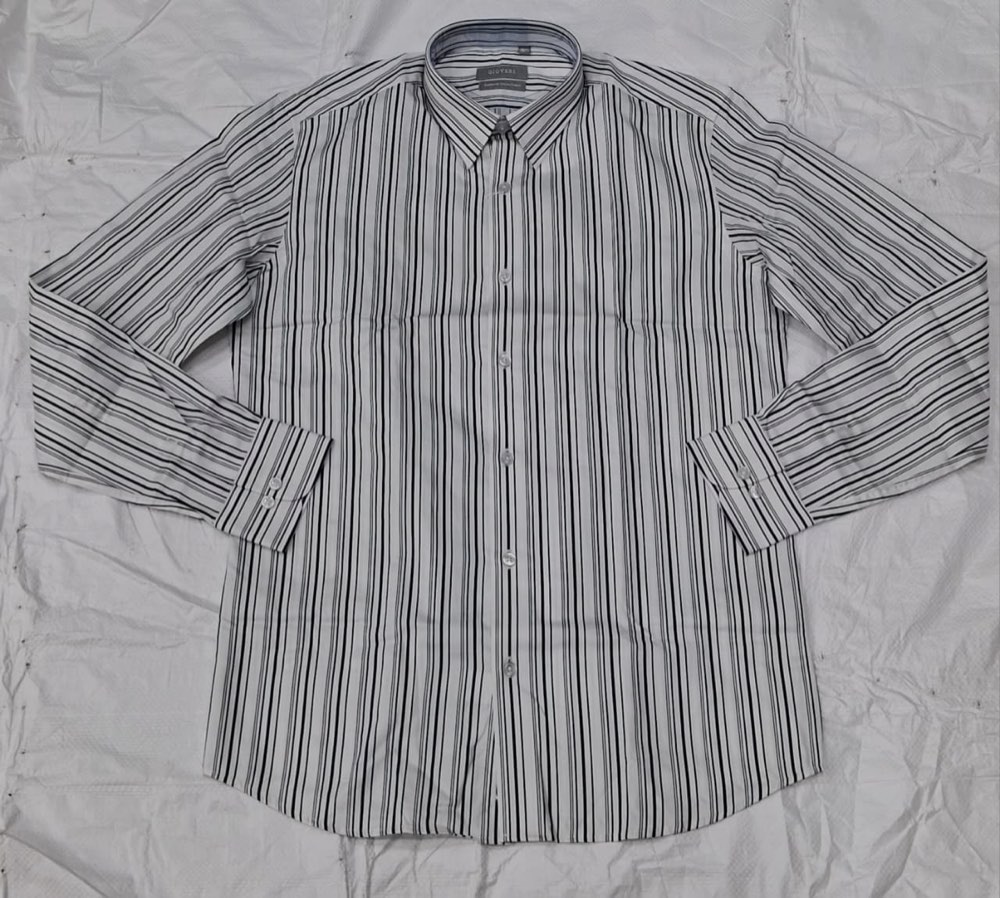
White long-sleeve shirt with black and grey vertical stripes of varying width, laid flat, with a point collar and two-button cuffs
Fig. 03 — White ground, mixed black and grey stripes, point collar: a versatile pattern for office shirts that pairs with grey or navy trousers.

Most shirt purchases go wrong in one of two ways: buying for colour before fit, or buying a shirt that suits a different life from the one you lead. A simple sequence of decisions avoids both. Work through them in order and each choice narrows the next, so you end up with business shirts that fit your body, your schedule and the rest of your wardrobe.

1. Start with the occasion

Ask where the shirt will be worn most often. A shirt for daily desk work, a shirt for presentations and a shirt for travel have different priorities. Formal settings favour smooth, plain or finely striped fabrics in white or blue. Business casual settings allow more texture and pattern. Being honest about the occasion prevents buying a dress shirt you only wear twice a year.

2. Get the fit right

Fit decides whether a shirt looks deliberate or borrowed. Check the collar first: fastened, it should allow roughly a finger or two of room without gaping. The shoulder seam should sit at the edge of your shoulder bone. The chest should close without pulling into X-shaped creases around the buttons. Sleeves should end around the wrist bone so that a little cuff shows beyond a jacket sleeve. If you plan to tuck the shirt in, the tail must be long enough to stay in when you sit and reach.

3. Match the fabric to your day

Poplin is smooth, light and crisp, ideal for formal occasions. Twill has a soft diagonal texture, drapes well and tends to resist creasing. Oxford is heavier and more textured, suited to business casual. For hot, humid days, look for breathable cotton or cotton-linen blends; for long days with travel, a twill or an easy-care finish helps the shirt stay presentable.

4. Choose a collar for your face and your tie habits

A point collar suits most faces and narrow tie knots. A spread collar frames a fuller knot and adds width to a narrow or long face. A button-down collar is relaxed and best worn without a tie or with a casual knitted one. If you rarely wear a tie, choose a collar with enough height and structure to stand neatly when open.

5. Decide on colour and pattern

White and light blue are the foundations because they pair with almost every trouser and tie. Fine stripes and small checks add interest while staying professional. Bolder patterns, like the mixed stripe pictured here, work best when the rest of the outfit is quiet: grey or navy trousers, plain shoes, a solid tie if any.

6. Inspect the construction

Look closely at the stitching: neat, even and dense stitches suggest care. Patterns should line up across the front placket and, ideally, at the pocket and yoke. Buttons should be firmly anchored. The collar should sit symmetrically, with points of equal length.

7. Consider the care it will need

Read the label before you commit. A pure cotton poplin may need ironing after every wash; an easy-care twill may need only a quick press. Match the shirt to the time you are realistically willing to spend on it.

A practical example

Someone starting a new office role in Andheri, with a mix of desk days and client meetings, might begin with a white poplin with a point collar, a light blue twill with a semi-spread collar, and one fine-striped shirt. Those three cover formal meetings, everyday office wear and a smart Friday.

Choosing the right business shirt is less about following trends than about fit, fabric and honest planning. Make the decisions in order and the shirt you bring home will earn its place in your weekly rotation.

Back to index

No. 04Fit3 min read

Understanding Formal and Business Shirt Fits

Slim, regular, tailored, relaxed: what the labels mean, how a shirt is shaped, and how to test a fit in under a minute.

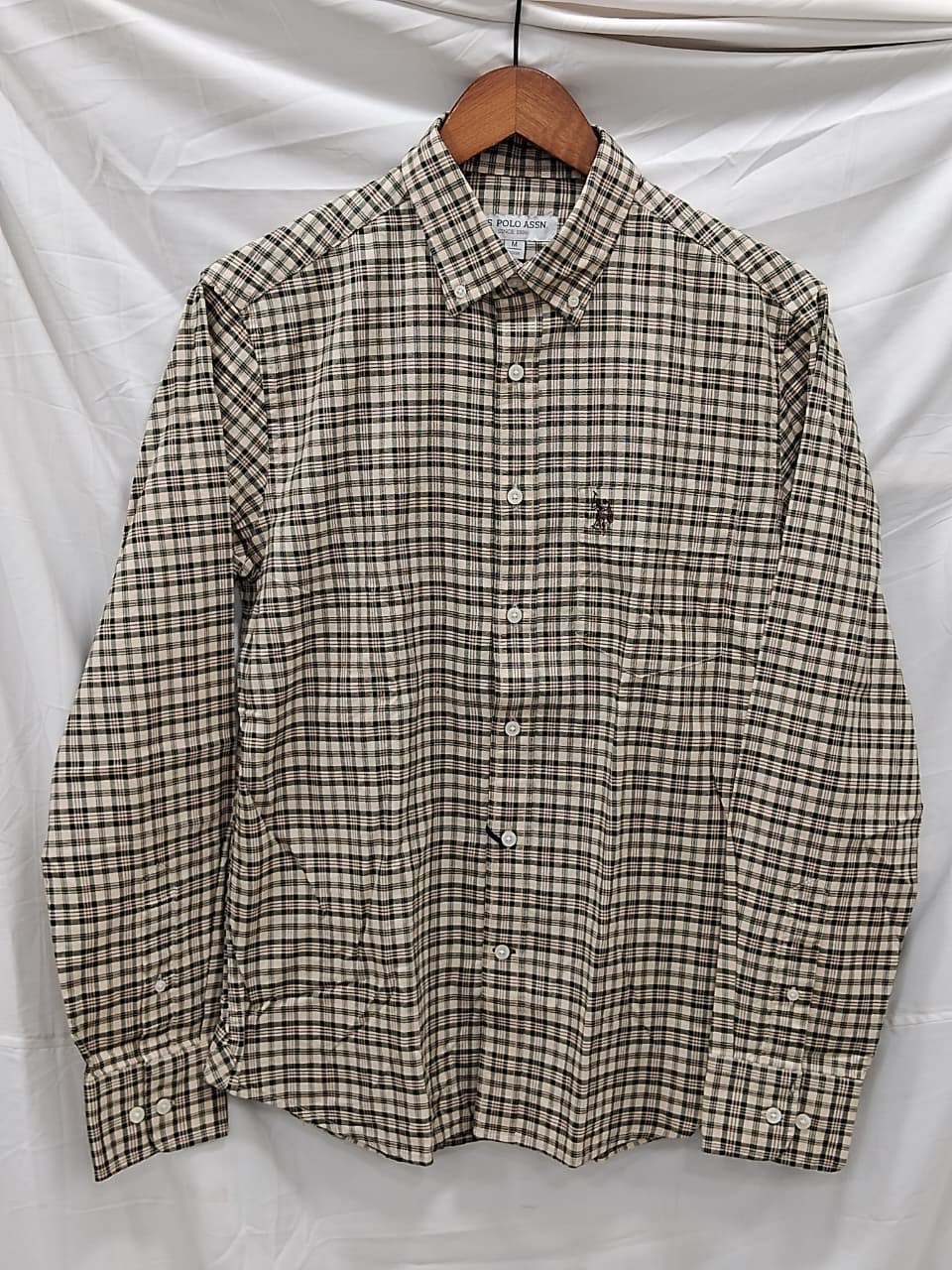
Beige, brown and black checked button-down shirt on a wooden hanger, with a chest pocket and an embroidered logo
Fig. 04 — A checked button-down on the hanger: a regular cut that can be worn tucked or, in casual settings, untucked.

Two shirts with the same collar size can fit completely differently. The difference lies in the cut: how much fabric the pattern allows through the chest, waist and arms, and how the back is shaped. Brands use labels such as slim, regular and tailored, but these names are not standardised, so it helps to understand what each generally means and to know what to check for yourself.

Slim fit

A slim fit business shirt is cut close through the chest and waist, often with narrower sleeves and a higher armhole. It gives a clean, modern line, especially under a fitted jacket, and suits slender and athletic builds. The trade-off is less room for movement; if buttons strain when you sit, the shirt is too slim for you.

Regular or classic fit

A regular fit, sometimes called classic, allows more ease through the body and sleeves. It is comfortable over long days, suits broader builds and drapes well when worn without a jacket. Cut well, it should still look neat rather than billowing, with only modest excess at the waist when tucked in.

Tailored fit

Tailored fit usually sits between slim and regular. It is often shaped with back darts, two vertical seams that remove fabric at the waist, giving a defined silhouette without the tightness of a slim cut. Some brands use the term for their slimmest shape, so always try the shirt on.

Relaxed fit

Relaxed shirts are generous throughout and are mainly suited to casual and smart casual wear, sometimes untucked. For formal business shirts they can look untidy under a jacket.

How a shirt is shaped

A few construction terms explain why fits feel different. The yoke is the panel across the upper back that joins the shoulders. A box pleat at the centre of the back, or side pleats near the shoulder blades, add room for reaching and driving. Darts remove fabric at the waist. The armhole height matters too: a higher armhole lets the arm move without lifting the whole shirt.

A one-minute fit check

  • Collar: buttoned, one or two fingers should slide in comfortably.
  • Shoulders: the seam sits at the edge of the shoulder bone, not down the arm.
  • Chest: no pulling between buttons when you stand or sit.
  • Waist: some ease, but no large balloon of fabric when tucked.
  • Sleeves: the cuff reaches the wrist bone and stays there when you bend your arm.
  • Length: long enough to stay tucked when you lift your arms.

Tucked or untucked

Shirts intended to be tucked have a longer, curved tail. Shirts designed to be worn out tend to be shorter with a straighter or gently curved hem that ends around the middle of the trouser fly. Wearing a long formal shirt untucked rarely looks right.

Matching fit to the outfit

Keep proportions consistent: slim shirts look best with slimmer trousers and fitted jackets, while regular fits balance straighter trousers. If you often remove your jacket in the afternoon, choose a fit that looks finished on its own.

The right fit is the one that looks tidy when you stand and still feels comfortable after eight hours at a desk. Use the labels to narrow the choice, then let the mirror and the one-minute check decide.

Back to index

No. 05Style3 min read

A Guide to Business Shirt Collars

The collar frames the face and sets the formality of the whole outfit. Here is how the main styles differ and when to wear each.

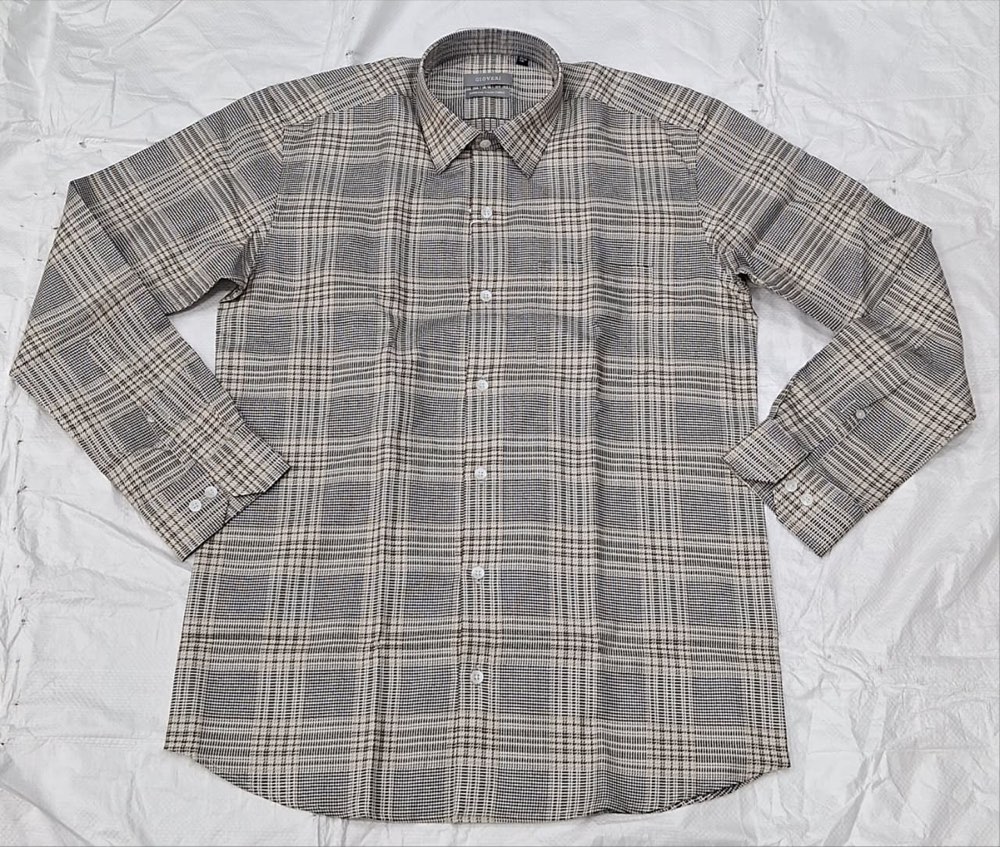
Grey, beige and brown checked shirt laid flat, showing a classic point collar, a placket with white buttons and long sleeves
Fig. 05 — A classic point collar on a large grey-and-brown check: moderate spread, room for a tie, sensible for everyday office wear.

Of all the parts of a business shirt, the collar is the one people see first and remember. It sits closest to the face, it frames the tie knot, and it shows quickly whether a shirt is well made. Knowing the main collar styles, and the vocabulary used to describe them, makes it much easier to choose shirts that suit your face, your ties and your workplace.

Anatomy of a collar

A shirt collar has two main parts. The collar band, or stand, wraps around the neck and carries the top button. The leaf, or fall, folds over the band and ends in the collar points. The spread is the distance between the points; the tie space is the gap at the top where the knot sits. Many business shirts have slots under the points for collar stays, slim removable strips that keep the points straight.

Point collar

The point collar has a relatively narrow spread, with points angled downward. It is the most traditional business collar, pairs well with smaller tie knots such as the four-in-hand, and tends to lengthen the look of a rounder face. It is a dependable choice for formal business shirts.

Semi-spread and spread collars

A semi-spread collar opens the points a little wider and suits most faces and most knots, which is why it is so common. A full spread collar opens further still, framing a fuller knot such as a half-Windsor and balancing a longer or narrower face. Spread collars also look neat when worn open without a tie.

Cutaway collar

The cutaway pushes the points almost horizontally outwards. It has a confident, contemporary look and needs a substantial knot to fill the space; without a tie it can look slightly unfinished unless the collar is well structured.

Button-down collar

Small buttons fasten the collar points to the shirt front, giving a soft roll to the collar. Associated with sporting origins and with Oxford cloth, the button-down is relaxed by nature. It is excellent for business casual and smart casual days and works well open-necked; it is generally considered less formal under a suit.

Other collars you will meet

  • Club collar: rounded points, a vintage note that suits relaxed office settings.
  • Band or mandarin collar: a stand with no leaf, worn without a tie; smart casual rather than formal.
  • Wing collar: small upturned tips, reserved for formal evening wear with a bow tie.
  • Tab and pin collars: a tab or bar beneath the knot lifts the tie; a polished, slightly old-fashioned choice.

Choosing for your face and neck

As a general tendency, a collar that contrasts with the shape of the face balances it: point collars can lengthen a round or broad face, while spread collars add width to a long or narrow one. Taller collar bands suit longer necks; lower bands suit shorter necks. These are tendencies rather than laws, so try a few styles in front of a mirror.

Looking after collars

Remove stays before washing, press the collar from the points inward to avoid creases at the tips, and store shirts on hangers with the top button fastened so the collar keeps its shape.

A sensible collection of office shirts might include point and semi-spread collars for days with a tie, a spread collar for meetings and open-necked wear, and a button-down for relaxed days. With those covered, the collar will always suit the occasion.

Back to index

No. 06Fabric3 min read

Understanding Shirting Fabrics

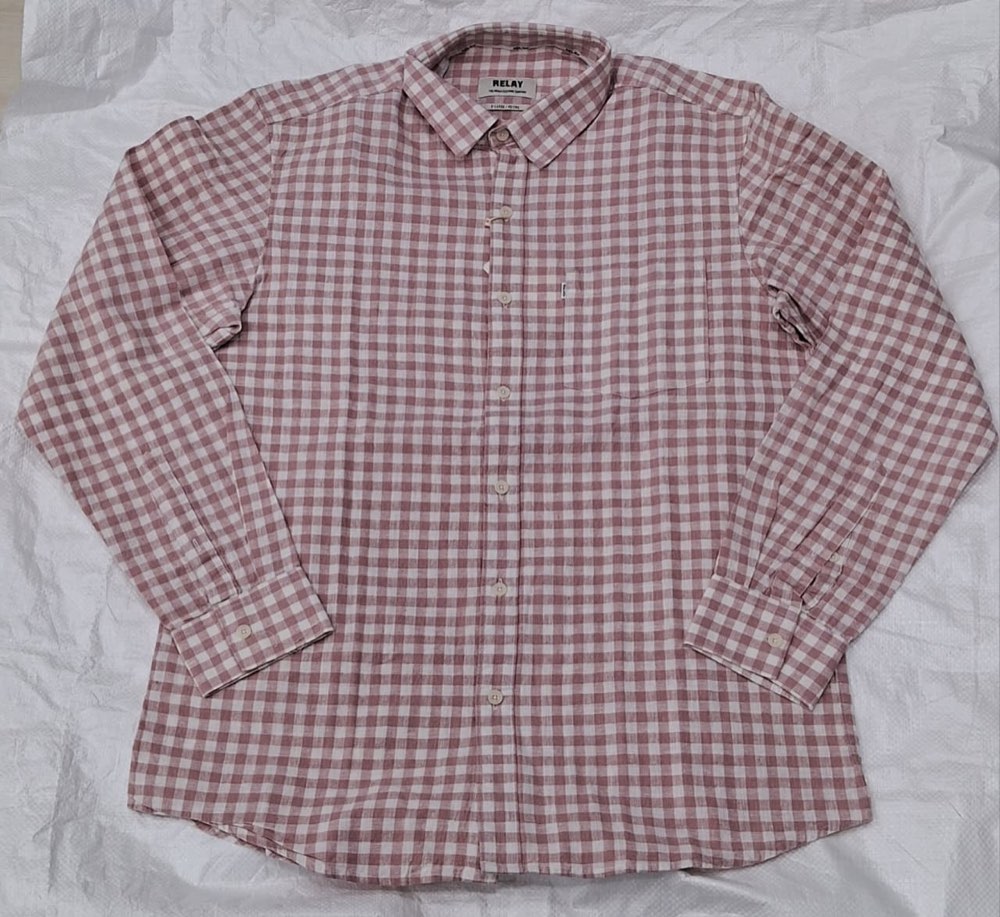
Rose and white gingham check shirt with a soft, slightly slubbed texture, laid flat with a chest pocket and long sleeves
Fig. 06 — A rose gingham with a soft, slubbed handle that suggests a linen or cotton-linen feel; the label is the only reliable confirmation of fibre content.

Fibre, yarn, weave and finish: the four layers that decide how a shirt feels, breathes, creases and lasts.

Department
Fabric
Reading time
About 3 minutes (540+ words)
Article
No. 06 of 12

Shirting is a vocabulary of its own, and labels rarely explain it. "100% cotton" tells you the fibre but says nothing about how fine the yarn is, how it was woven or how it was finished. Yet those factors determine whether a shirt feels cool or clammy, crisp or soft, whether it creases by noon and how many washes it survives. Understanding them makes choosing cotton business shirts far more predictable.

Layer one: the fibre

Cotton is the backbone of business shirting. It breathes, absorbs moisture and takes dye well. Longer cotton fibres, often described as long-staple or extra-long-staple, can be spun into finer, smoother and stronger yarns. Linen, made from flax, is cool and quick-drying but creases easily, which gives it a relaxed look better suited to business casual. Cotton-linen blends combine some of linen's coolness with cotton's softness and creasing less than pure linen.

Polyester-cotton blends resist wrinkles and dry quickly, though they may breathe less well than pure cotton. A small proportion of elastane adds stretch for comfort in slimmer cuts. Some shirts also use cellulose-based fibres such as viscose or lyocell for a fluid drape.

Layer two: the yarn

Yarn fineness is often expressed as a count, such as 50s, 80s or 100s; higher numbers indicate finer yarn. Finer yarns produce a smoother, lighter, often silkier fabric, but they can be more delicate. Two-ply means two yarns twisted together before weaving, which generally adds strength and a richer feel. A two-ply fabric with a moderate count is often more durable than a single-ply fabric with a very high one.

Layer three: the weave

The weave arranges yarns into cloth. Plain weaves such as poplin and broadcloth are smooth and crisp. Twills show diagonal lines and drape softly. Oxford uses a basket-type construction for a textured, sturdy cloth. End-on-end alternates coloured and white yarns for a fine, mottled look. Dobby weaves add small geometric figures woven into the cloth, and chambray uses a coloured warp with a white weft for a soft, faded effect. The next article compares poplin, twill and Oxford in detail.

Layer four: the finish

After weaving, cloth is often treated. Mercerisation strengthens cotton and adds lustre. Easy-care or non-iron finishes reduce creasing, which is useful for travel, though they can make cotton feel slightly less soft. Brushing creates a softer, warmer surface.

Weight and feel

Fabric weight is sometimes stated in grams per square metre. Lighter shirting suits hot days and layers under jackets; heavier cloth, such as Oxford or flannel, feels sturdier and more casual. Always hold a fabric up to the light and crush a corner in your hand: how quickly it recovers is a useful hint about creasing.

Choosing fabric for Mumbai

In a warm, humid city with heavily air-conditioned offices, breathable cotton poplins, light twills and cotton-linen blends tend to be the most comfortable office shirts. During the monsoon, faster-drying fabrics are practical. Save heavier Oxfords and brushed cottons for cooler months or air-conditioned days.

Read a shirt from the fibre outwards: fibre, yarn, weave, finish. Once you can name each layer, fabric labels stop being mysterious and start being useful.

Back to index

No. 07Fabric4 min read

Poplin, Twill and Oxford: The Difference

Three weaves account for most business shirts. They look similar from across a room and behave very differently up close.

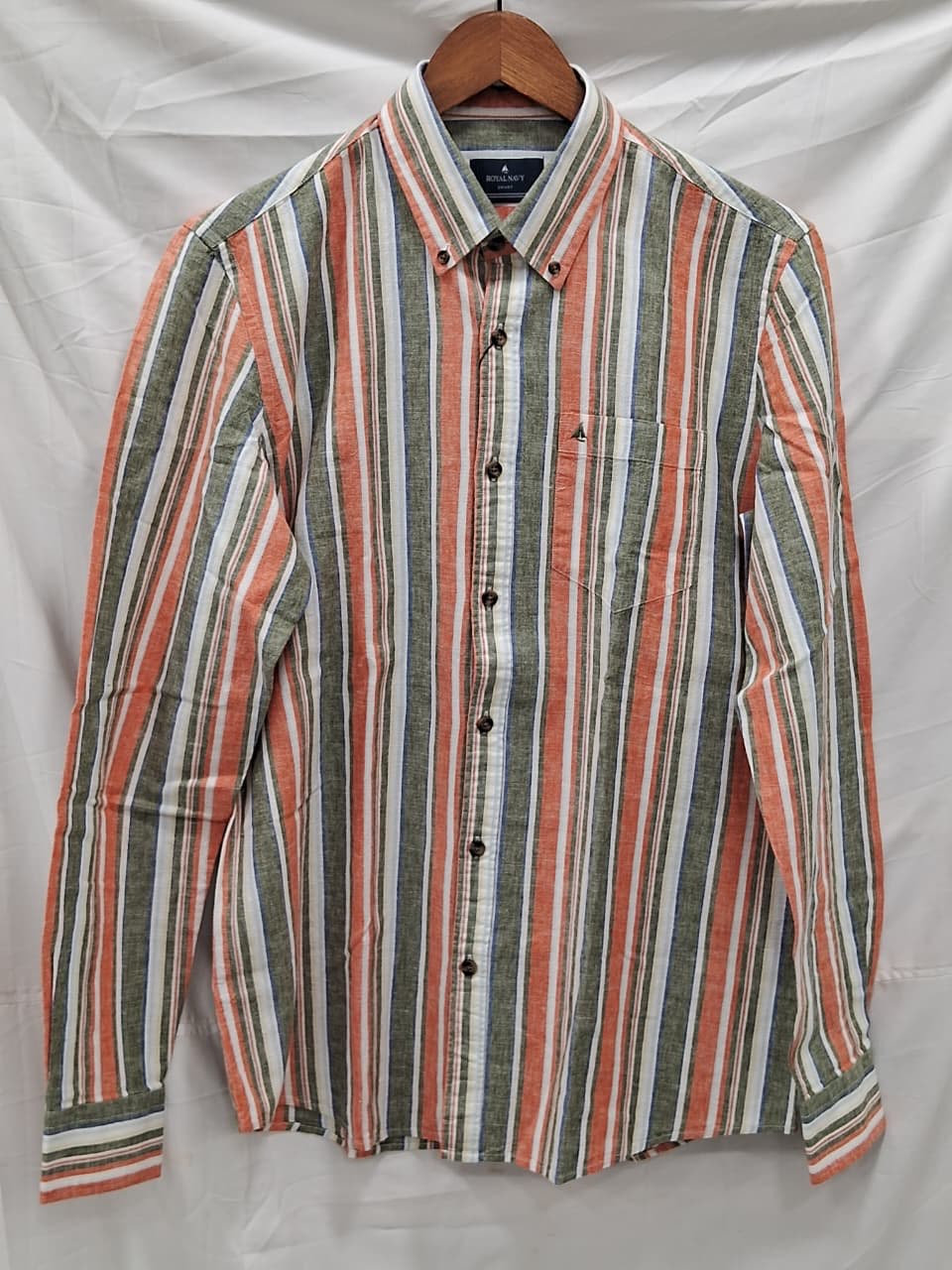
Multicoloured shirt with orange, olive, white and blue vertical stripes and a visibly slubbed texture, on a hanger with a button-down collar and chest pocket
Fig. 07 — Bold multicolour stripe with a slubbed, irregular texture and a button-down collar: firmly casual. For formal days, choose a smooth poplin or fine twill instead.

Walk along a rail of office shirts and many will look alike: solid colours, fine stripes, neat collars. Touch them and the differences appear. Most are made in one of three weaves, poplin, twill or Oxford, and each has its own texture, drape, sheen and level of formality. Knowing which is which helps you match the shirt to the day.

First, warp and weft

All woven cloth has two sets of yarns. The warp runs lengthways and is held taut on the loom; the weft passes across it. A weave is simply the pattern in which the weft goes over and under the warp. Changing that pattern changes everything about the cloth.

Poplin

Poplin is a plain weave: each weft yarn passes over one warp yarn and under the next. It is usually woven with fine, closely set warp yarns, giving a smooth, flat, slightly crisp surface with a very fine horizontal rib you can see only up close. Poplin is light and cool, takes a sharp press and looks clean under a jacket, which is why it is the classic choice for formal business shirts. Its weaknesses: it creases fairly readily and can be slightly translucent in white. The closely related term broadcloth is often used for a similar plain-woven cloth.

Twill

In a twill, each weft yarn passes over two or more warp yarns, and the starting point shifts by one with each row. The result is a visible diagonal line. Twill drapes softly, often has a subtle sheen and tends to resist and hide creases better than poplin. It is a little heavier and less see-through, which makes it a good all-day shirt for long meetings and travel. Variations include herringbone, where the diagonal reverses at intervals to create a zigzag, and fine twills that look almost smooth from a distance.

Oxford

Oxford cloth uses a basket-type construction in which pairs or groups of yarns are woven together. It is often made with a coloured warp and a white weft, which gives the characteristic two-tone, slightly pebbled texture. Oxford is thicker, softer with age and robust, and is usually paired with a button-down collar for business casual. Finer versions exist: pinpoint Oxford uses finer yarns for a smoother, dressier result, and royal Oxford has a more pronounced, often lustrous texture suitable for business wear.

PoplinPlain weave · smooth, crisp, light · most formal · creases more readily

TwillDiagonal weave · soft drape, slight sheen · formal to business · hides creases

OxfordBasket-type weave · textured, sturdy · business casual · softens with wear

Swatches are simplified graphic illustrations of each weave structure, not photographs of cloth.

How to tell them apart in a shop

Hold the fabric close to the light. If the surface is flat and uniform, it is likely poplin. If you see fine diagonal lines, it is a twill. If the texture looks like tiny woven squares, with a slightly speckled colour, it is probably Oxford.

Which to choose, and when

For a presentation, an interview or a formal meeting, choose a white or pale blue poplin. For a long day mixing desk work, travel and a client lunch, a twill keeps its composure better. For a relaxed Friday, a weekend lunch or an office with a casual culture, an Oxford button-down is the natural pick. Multicoloured, slubbed fabrics like the one pictured sit beyond all three on the casual side.

Poplin, twill and Oxford are not better or worse than one another; they are suited to different moments. A wardrobe that includes each gives you a shirt for every kind of working day.

Back to index

No. 08Wardrobe3 min read

Building a Versatile Office Wardrobe

A handful of well-chosen shirts and trousers, planned together, produces more good outfits than a full wardrobe bought piece by piece.

A versatile office wardrobe is not the largest wardrobe; it is the one where almost every piece works with almost every other. Planned properly, a small number of business shirts and trousers can cover a full working week, formal meetings and relaxed Fridays, with very little decision-making each morning.

Start with a core palette

Choose a narrow set of base colours for trousers and outer layers, typically navy, charcoal, mid-grey and a neutral such as beige or stone. These colours combine easily with one another and with nearly every shirt colour. Shoes and belts in black and brown complete the foundation.

The five-shirt foundation

  1. White poplin with a point or semi-spread collar, for formal occasions.
  2. Light blue in poplin or twill, arguably the most versatile office shirt of all.
  3. A fine stripe, such as blue or grey on white, for subtle pattern.
  4. A small check or gingham in muted tones, for business casual days.
  5. A soft colour such as pale pink, lilac or a textured Oxford, for variety.

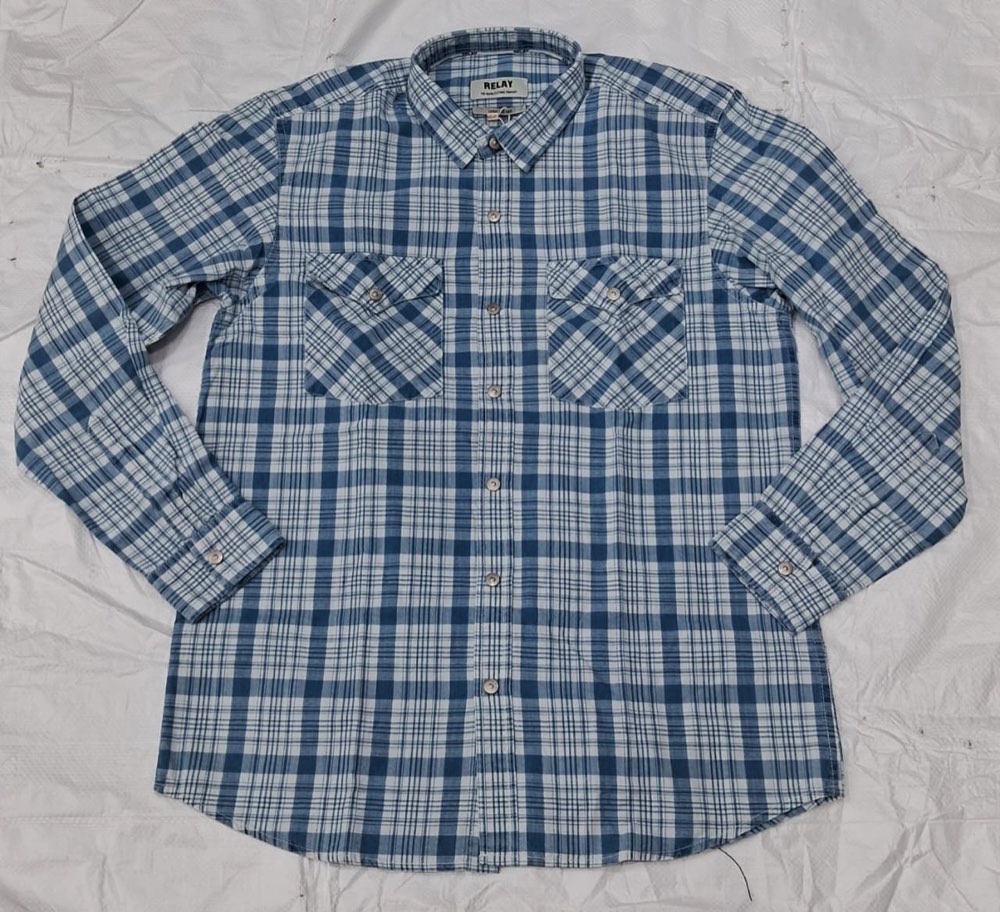
From there, add one or two shirts with more personality: a bolder stripe, a darker shirt for evening events, or a utility-style check like the one pictured for informal days.

Trousers and layers

Three pairs of trousers, for example charcoal, navy and beige, combined with five shirts give fifteen different shirt-and-trouser pairings before you add a jacket or a knit. One navy blazer and one fine knit in grey or navy extend that range further and allow you to adjust formality quickly.

Plan a sample week

A typical week could run: Monday, light blue twill with charcoal trousers; Tuesday, fine stripe with navy; Wednesday, white poplin with grey and a tie for a meeting; Thursday, check with beige; Friday, Oxford button-down with chinos. Repeating trousers is perfectly acceptable; it is the shirt that changes the look.

Rotation and longevity

Wearing the same shirt too often shortens its life. A rotation of at least five to seven shirts for a five-day week allows time for washing, drying and ironing without rushing, and lets fabric recover between wears. Watch the collar and cuffs for wear; those edges usually show age first.

Adapting for climate

For men's office wear in Mumbai, lighter cottons and cotton-linen blends deserve a larger share of the rotation, with a few heavier twills or Oxfords for cooler months or heavily air-conditioned offices. Keep one easy-care shirt for travel and long days.

Common mistakes to avoid

The most frequent wardrobe problem is a cupboard full of shirts that each work with only one pair of trousers. Others include buying several near-identical shirts in the same pattern, keeping shirts that no longer fit across the shoulders, and owning plenty of casual checks but no plain shirt for a formal meeting. A quick audit every few months, laying shirts and trousers side by side, shows where the gaps and duplicates are.

Buying with discipline

Before buying a new shirt, ask three questions: does it fit well; which trousers will I wear it with; and which occasion does it cover that my current shirts do not? If the answers are clear, it belongs in a versatile office wardrobe.

Build the core first, add personality second, and maintain a sensible rotation. The result is a wardrobe that makes mornings easier and always looks considered.

Back to index

Blue and white checked shirt laid flat, with two buttoned flap chest pockets and a point collar
Fig. 08 — A blue check with twin flap pockets: a casual, utility-inspired shirt best kept for relaxed days rather than formal meetings.
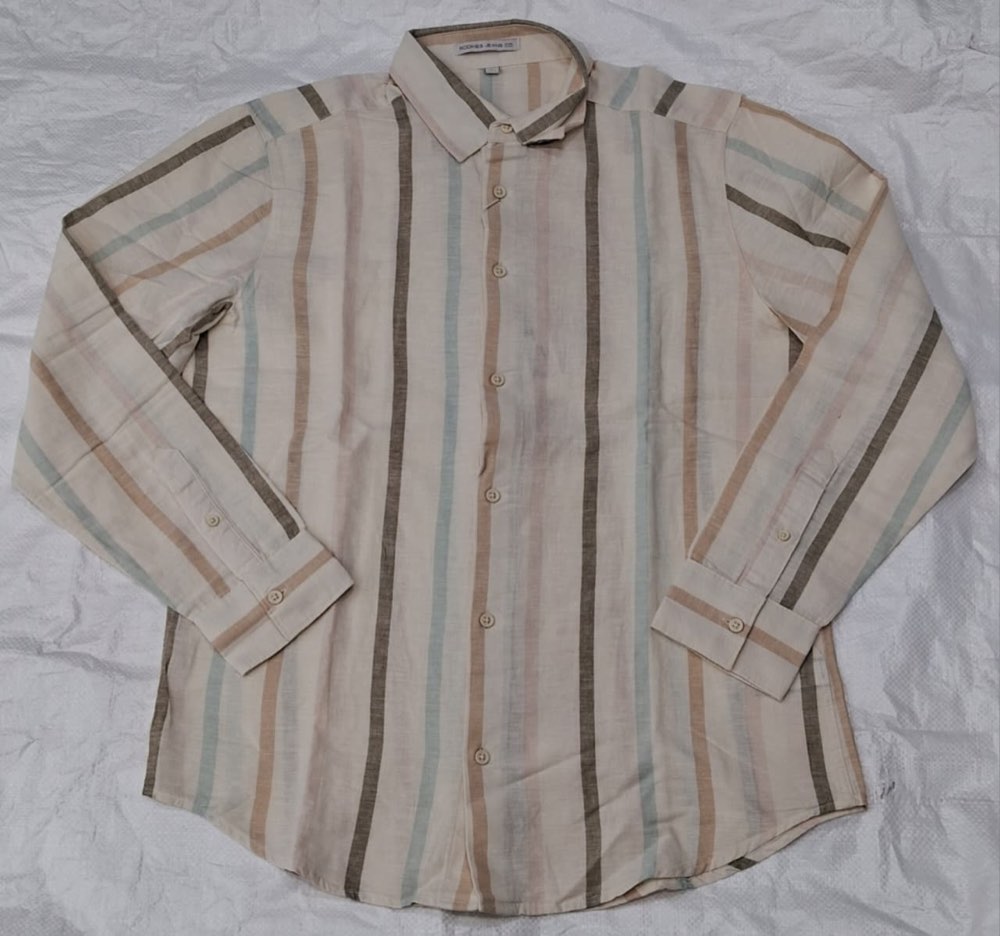
Cream shirt with soft brown, peach and pale blue-green vertical stripes and a slubbed texture, laid flat with long sleeves and a point collar
Fig. 09 — A cream shirt with soft multi-tone stripes: pair it with navy, olive or brown trousers, which echo the darker stripes without competing.

No. 09Wardrobe3 min read

Business Shirt and Trouser Combinations

Contrast, formality and texture: three principles that make shirt and trouser pairings work, with combinations you can wear tomorrow.

A shirt rarely works on its own; it is half of a combination with the trousers below it. The good news is that successful pairings follow a few dependable principles. Once you know them, you can combine office shirts and trousers confidently without needing a jacket or tie to hold the outfit together.

Principle one: contrast

The easiest combinations pair a lighter shirt with darker trousers. The contrast creates a clear, balanced line and looks deliberate. Pairing two similar mid-tones can look flat, while a dark shirt with light trousers is possible but generally reads as more casual or evening-oriented.

Principle two: matching formality

Formal trousers with a pressed crease, a smooth finish and a clean waistband pair naturally with poplin and fine twill shirts. Chinos and cotton trousers pair better with Oxfords, textured cottons and button-down collars. Mixing a very formal shirt with very casual trousers, or the reverse, tends to look accidental.

Principle three: texture and pattern

Let one garment lead. A striped or checked shirt sits best above plain trousers. Textured trousers, such as a flannel or a twill chino, pair well with plain shirts. If both are patterned, keep one pattern very subtle.

Combinations by trouser colour

TrousersShirts that workShoes & belt
CharcoalWhite, light blue, pink, lilac, fine stripesBlack or dark brown
NavyWhite, light blue, pale pink, grey, creamBrown or black
Mid-greyWhite, blue, pink, lavender, navy checkBlack or brown
Beige / stoneBlue, white, navy, olive, soft checksBrown or tan
Olive / brownWhite, cream, light blue, earthy stripesBrown

Charcoal and navy: the anchors

Charcoal is the most formal trouser colour and pairs with almost any shirt. A light blue poplin with charcoal trousers and black shoes is a classic for presentations. Navy is slightly warmer and works especially well with white, light blue and pale pink; a white twill shirt with navy trousers and brown shoes looks sharp in any office.

Beige, stone and khaki

Lighter neutral trousers belong mainly to business casual. They pair particularly well with blue shirts, from pale chambray to a navy check, and with white. Brown shoes and belts suit them better than black.

Olive and brown

Earthier trousers suit shirts in white, cream and soft stripes like the one pictured, where a darker stripe can echo the trouser colour. Keep the rest of the outfit quiet.

Formal trousers or chinos?

Formal trousers are usually made from wool, wool blends or smooth polyester-viscose suiting, with a pressed crease and a cleaner finish; they belong with formal business shirts and ties. Chinos are cotton twill trousers with a softer, more casual character and pair naturally with Oxfords, button-downs and textured shirts. Many offices accept both, so let the day's schedule decide: chinos for a desk day, formal trousers when a client or presentation is in the diary.

Details that complete the pairing

Match the belt to the shoes in colour and finish. Tuck formal shirts in fully and smoothly. Check trouser length: a slight break, or no break with slimmer trousers, keeps the line clean.

When in doubt, return to the classic: a light shirt, darker trousers, and leather that matches. From there, vary one element at a time and your combinations will stay polished.

Back to index

No. 10Style3 min read

Understanding Colour Coordination

Value, undertone, pattern scale: the working principles behind shirt, tie and trouser colours that look right together.

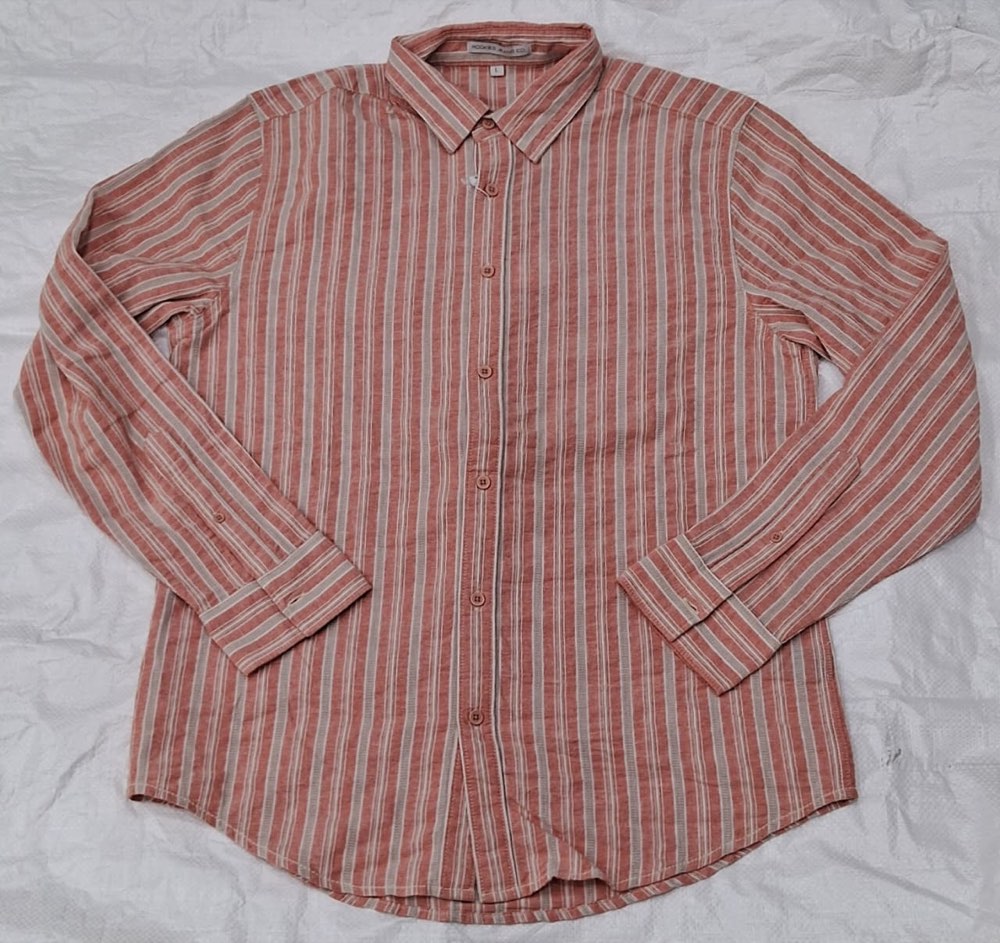
Coral and white striped shirt with a textured weave, laid flat, with a point collar and matching coral buttons
Fig. 10 — A coral-and-white stripe with tonal buttons: a warm, lively colour that looks best with navy, grey or stone rather than another strong colour.

Colour coordination in business dress can seem like a matter of taste, but most good combinations follow principles that can be learned. They concern how light or dark each colour is, whether it leans warm or cool, how strong it is, and how patterns interact. Master these and you can combine business shirts, ties and trousers with confidence.

Value: light against dark

Value means how light or dark a colour is. Professional outfits usually look clearest with a difference in value between shirt and trousers, and between shirt and tie. A white shirt and charcoal trousers have strong contrast and look formal. A light blue shirt with mid-grey trousers has moderate contrast and looks relaxed but tidy. Low contrast can work too, but it needs texture to keep it from looking flat.

Undertone and complexion

Colours lean warm (towards yellow and red, like cream, coral and olive) or cool (towards blue, like icy white, sky blue and lavender). Many people find that colours close to their own undertone look harmonious near the face. Contrast between your skin, hair and shirt matters as well: strong contrasts often suit people with naturally high contrast in their colouring, while softer tones suit softer colouring. Experiment in daylight, not under shop lighting alone.

Saturation: the role of strong colour

Muted, greyed colours look calm and professional; saturated colours draw attention. In an office outfit, it is usually wise to let only one item carry a strong colour, whether a coral shirt like the one pictured, a vivid tie or a bright pocket square, while the rest stays neutral.

Pattern scale

When combining patterns, vary their size. A fine pinstripe shirt pairs well with a tie in a larger motif or a bolder stripe; a bold check shirt calls for a plain or very small-patterned tie. Two patterns of the same scale tend to clash visually, even in matching colours.

The office colour families

  • Whites and creams: the most formal, compatible with every tie and trouser.
  • Blues: from pale to mid, the backbone of office shirts and flattering on most people.
  • Pinks and lilacs: soft, warm alternatives that pair beautifully with navy and grey.
  • Greys and charcoals: modern and quiet; better for evening and smart casual than for formal days.
  • Earthy tones: olive, rust and sand, mainly for business casual.

Practical combinations

White shirt, navy tie, charcoal trousers: formal and reliable. Light blue shirt, burgundy tie, navy trousers: confident and classic. Pale pink shirt, navy knit tie, mid-grey trousers: warm and approachable. Coral stripe, no tie, navy chinos: lively for a relaxed Friday.

Belts, shoes and small accessories

Leather accessories form their own colour group. Keep the belt and shoes in the same family, black with black, brown with brown, and let a watch strap follow if you can. Black leather reads as more formal and suits charcoal and grey; browns, from dark chocolate to tan, are warmer and pair naturally with navy, beige and olive. A pocket square should pick up a colour from the shirt or tie rather than match the tie exactly.

Light and season

Bright daylight and warm weather suit lighter, fresher tones; darker, richer colours feel natural in evening and cooler months. In Mumbai's strong light, pale blues, whites and soft pastels look crisp during the day.

Coordination is about relationships between colours rather than individual colours. Manage value, undertone, saturation and pattern scale, and almost any well-chosen shirt will sit comfortably in your outfit.

Back to index

No. 11Style3 min read

The Details That Define a Well-Constructed Shirt

Stitch density, seams, interlining, buttons and pattern matching: what to look for when judging quality up close.

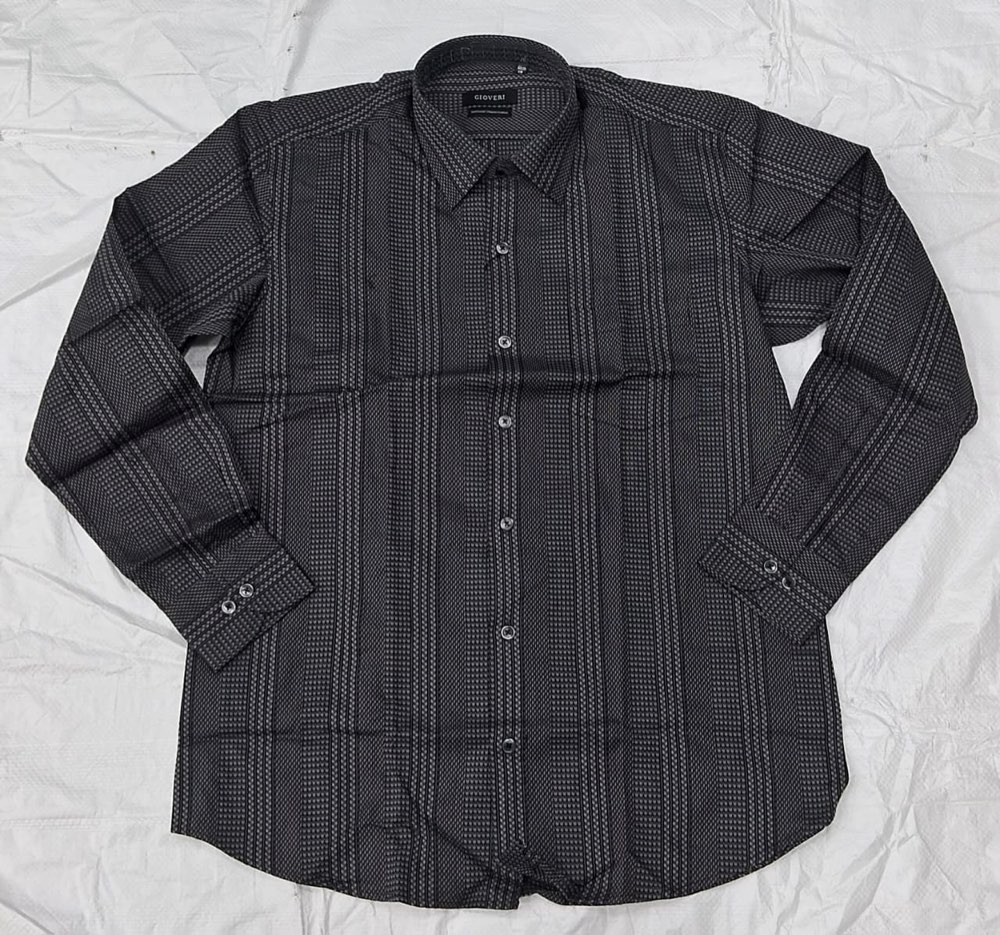
Charcoal-black shirt with a woven grey stripe-and-dot textured pattern, laid flat, with a point collar and smoke-coloured buttons
Fig. 11 — A charcoal shirt with a woven textured stripe: close inspection shows how pattern lines run down the placket, sleeves and collar.

From across a room, most business shirts look alike. Up close, construction separates a shirt that will keep its shape for years from one that will twist, pucker or lose buttons after a few washes. None of these details require expert knowledge to check; they only require knowing where to look.

Stitch density and seam finish

Look at the stitching along the side seams and the collar edge. Small, even, closely spaced stitches generally indicate careful sewing; long, loose stitches are more likely to pucker or unravel. Many well-made shirts use single-needle construction on key seams, sewing each side separately for a flat, neat finish. Felled seams, where the raw edges are folded and enclosed, are stronger and cleaner inside than overlocked edges.

Collar construction

Inside the collar sits an interlining that gives it shape. Fused interlinings are bonded to the fabric and give a crisp, consistent collar suited to formal shirts; non-fused interlinings are sewn in and give a softer roll. Either way, the collar should be symmetrical, its points equal in length, and it should not bubble. Removable collar stays are a good sign: they keep points straight and come out before washing.

Pattern matching

On striped and checked shirts, look at whether the pattern runs continuously across the front placket, the chest pocket and the yoke. Matching patterns requires more fabric and more time, so it is often a sign of care. Check the sleeves where they meet the cuffs, too.

Buttons and buttonholes

Buttons should be firmly sewn, with no loose threads. Mother-of-pearl buttons are traditionally prized for their depth and lustre; good resin buttons can also be thick and durable. Buttonholes should be densely stitched with no fraying. The gauntlet button, a small button on the sleeve placket above the cuff, stops the opening from gaping.

Cuffs, placket and yoke

Cuffs should be firm and evenly shaped. Barrel cuffs fasten with buttons; double or French cuffs fold back and use cufflinks. The front placket should lie flat and straight. A split yoke, cut in two pieces across the upper back, can follow the shoulders more closely; on striped fabric, it often creates a chevron where the halves meet.

The hem and side seams

A neatly turned, narrow hem that sits flat shows care. Some shirts add a small triangular gusset where the side seam meets the hem to reinforce that stress point.

Fabric and cutting

Construction begins before sewing. Panels should be cut on the straight grain so that the shirt hangs evenly and does not twist after washing; a side seam that spirals towards the front is a common sign of careless cutting. The sleeve should be set smoothly into the armhole without puckers, and the shoulder seam should run straight. On a woven textured fabric, such as the charcoal shirt pictured, the pattern lines should run vertically down the front without drifting.

A quick quality checklist

  • Stitches small, even and straight along every seam.
  • Collar symmetrical, points equal, no bubbling.
  • Patterns aligned at the placket, pocket and yoke.
  • Buttons secure, buttonholes clean.
  • Seams flat and enclosed when viewed inside out.

None of these details is visible in a product photo or on a price ticket, but each affects how a shirt looks after its twentieth wash. When choosing office shirts, a minute spent looking at the inside is time well spent.

Back to index

No. 12Care3 min read

Caring for Business Shirts

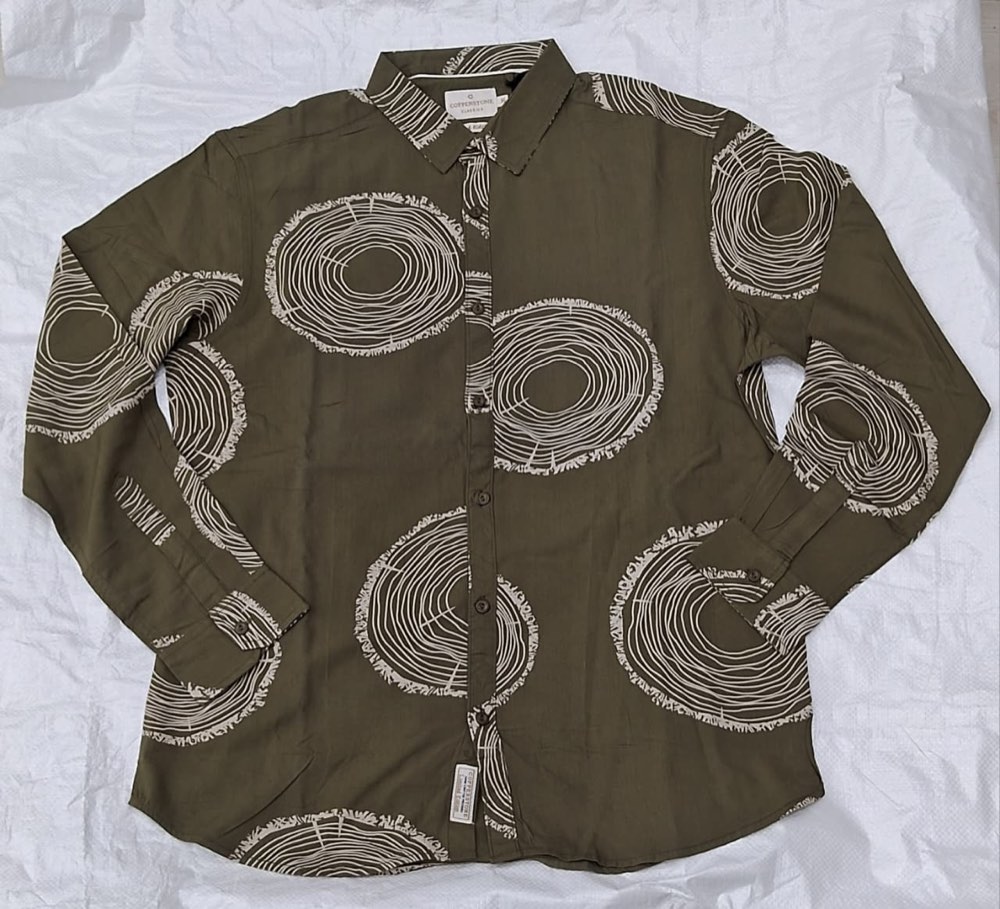
Olive long-sleeve shirt printed with large cream tree-ring circles, laid flat with dark buttons and a point collar
Fig. 12 — A printed shirt with large cream motifs: prints like this are best washed inside out and ironed on the reverse to protect the design.

Washing, drying, ironing and storing: a practical routine that keeps collars crisp, colours clear and shirts in rotation for longer.

Department
Care
Reading time
About 3 minutes (530+ words)
Article
No. 12 of 12

A good business shirt is an investment in looking composed, and most of its life is decided after you bring it home. The way it is washed, dried, ironed and stored determines whether the collar stays sharp and the colour stays clear for many seasons or fades within a few months. The routine below is simple and works for most cotton and cotton-blend office shirts, though the care label should always have the final word.

Before you wash

Unbutton every button, including the collar points and cuffs, to reduce strain on the threads and buttonholes. Remove collar stays; they can warp or punch through the collar in the machine. Empty the pocket. Pre-treat collars and cuff edges, where sweat and skin oils build up, with a little liquid detergent worked in gently with your fingers.

Washing

Separate whites from colours and darks. Wash at the temperature on the label; cooler washes are kinder to colours and fibres and usually sufficient for everyday wear. Use a gentle or shirt cycle and avoid overloading the drum so shirts can move freely. Turn printed shirts, like the one pictured, inside out to protect the print. Wash sweat marks promptly, as they set over time.

Drying

High-heat tumble drying can shrink cotton and weaken fibres. The safer approach is to shake each shirt out, button the top button and hang it on a shaped hanger to dry, smoothing the collar, placket and cuffs by hand. During the Mumbai monsoon, dry shirts indoors with good airflow, using a fan if necessary, and make sure they are completely dry before storage to prevent musty odours and mildew.

Ironing, in order

Iron while the shirt is slightly damp, or use steam, at the temperature suited to the fibre. A consistent order prevents re-creasing parts you have already pressed:

  1. Collar: underside first, from the points inward.
  2. Cuffs: inside, then outside.
  3. Sleeves: lay flat along the seam; press the placket side first.
  4. Yoke and shoulders: over the narrow end of the board.
  5. Back: then each front panel, working around the buttons, never over them.

Iron dark and printed shirts on the reverse to avoid shine and protect designs. Replace the collar stays once the shirt has cooled.

Storage

Hang shirts on wooden or shaped hangers that support the shoulders, with the top button fastened so the collar keeps its line. Leave space between shirts to prevent creasing and allow air to circulate. Avoid sealing cotton shirts in plastic for long periods; breathable cotton covers are better for long-term storage.

Rotation and small repairs

Rotating several shirts gives each one time to rest between wears and washes. Sew loose buttons back on before they fall off, and keep spare buttons supplied with new shirts. A shirt with a frayed collar may still serve well under a knit or for casual days.

Thoughtful care takes only a few extra minutes per shirt and makes a visible difference. Treat your office shirts gently, and they will continue to look sharp long after a careless routine would have worn them out.

Back to index

Colophon About this journal

Read it here. See the shirts in person.

The Businesswear Journal is a general guide to men's workwear shirts. Historical notes are summarised from widely documented clothing history; fabric and fit descriptions reflect common industry terminology, which can vary between brands. Shirts photographed in this journal are illustrations of the styles discussed.

To compare fits, collars and fabrics on business shirts in Mumbai, visit Options Mall at Vile Parle Shopping Centre, a short distance from Andheri, or browse the visual gallery and the styling guide.

Plan a visitContact →

Next stop · 11Gallery