Options Mall · Business shirts near Andheri · Vile Parle West, Mumbai

The 9-to-9 09:00 The business day, dressed +91 8369381345

All stops 01—12

+91 8369381345 optionsclothingmumbai@gmail.com

05 / 12 · Fits & Comfort

Fit guide · Business shirts Mumbai

Fits & Comfort

How a business shirt should sit, move and feel — from the first button in the morning to the last meeting of the evening.

Fabric and colour catch the eye, but fit decides whether a shirt looks composed at 10:00 and still feels easy at 19:00. This guide explains the six common business shirt fits, the five zones where fit shows, and a practical check you can run in any fitting room.

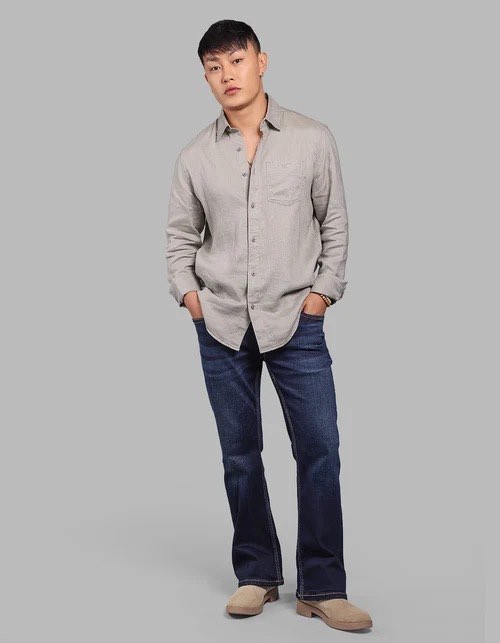
Full-length view of a man in a grey long-sleeve shirt with a chest pocket, worn untucked over dark blue jeans with suede boots, hands in pockets

Five fit zones

  1. Shoulder The seam meets the outer edge of the shoulder.
  2. Chest Buttons lie flat; no pull lines when you stand tall.
  3. Sleeve Cuff reaches the wrist; a little ease around the arm.
  4. Waist Fabric follows the torso without ballooning.
  5. Length Long enough to stay tucked when you sit and reach.
Numbered markers show where each zone sits on the body.

01 The fit spectrum

Six fits, one line from close to generous

Fits are best understood as points along a scale of ease — the extra room between the shirt and the body. Names are not standardised: one maker's "tailored" may be another's "slim", so treat the labels as a starting point and judge the shirt on you.

Closest to the body

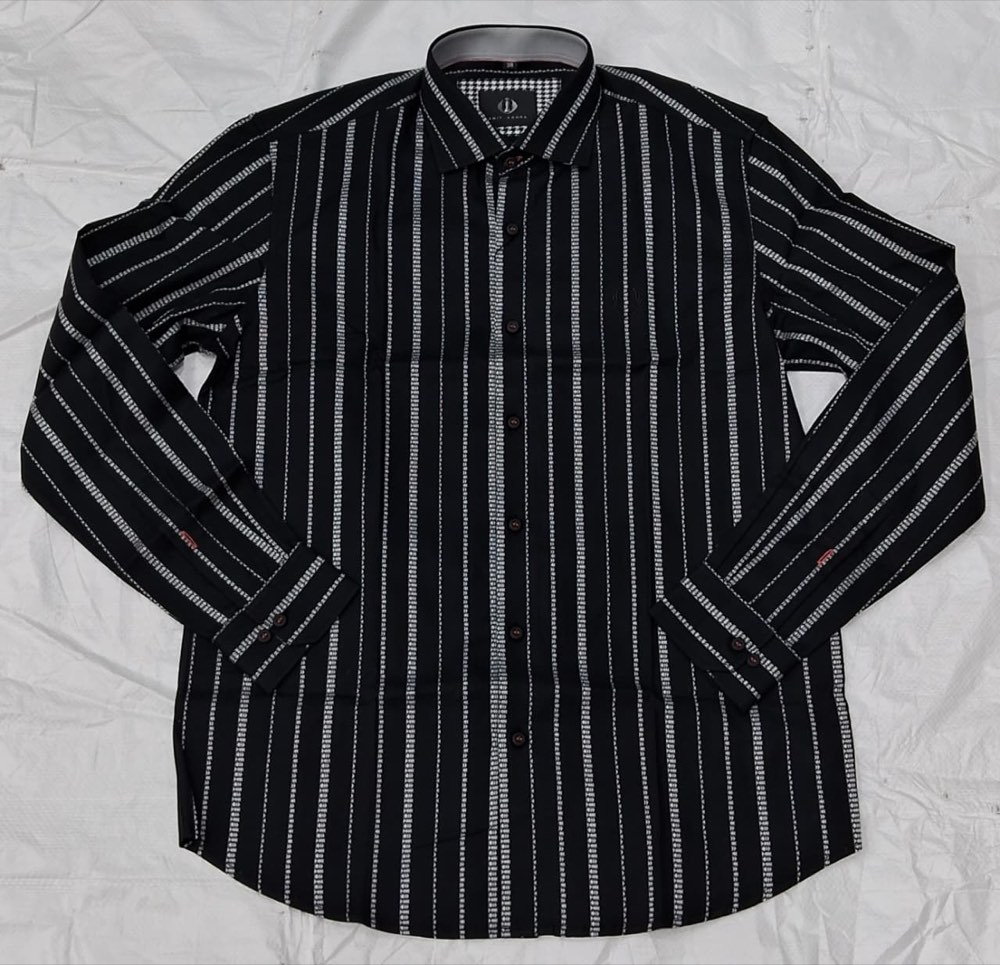
Black long-sleeve shirt with white textured vertical stripes and a dark spread collar, laid flat on white cloth

Slim fit

Chest
1 of 5
Waist
1 of 5
Sleeve
1 of 5

A slim fit business shirt is cut close through the chest and waist, with narrower sleeves and a higher armhole. Back darts or tapered side seams remove excess cloth, so the shirt tucks with almost no blousing and sits neatly under a fitted jacket.

Feels
Streamlined and sharp; you notice the fabric when reaching across a desk.
Works for
Presentations, fitted suits, evening events

Shaped at the waist

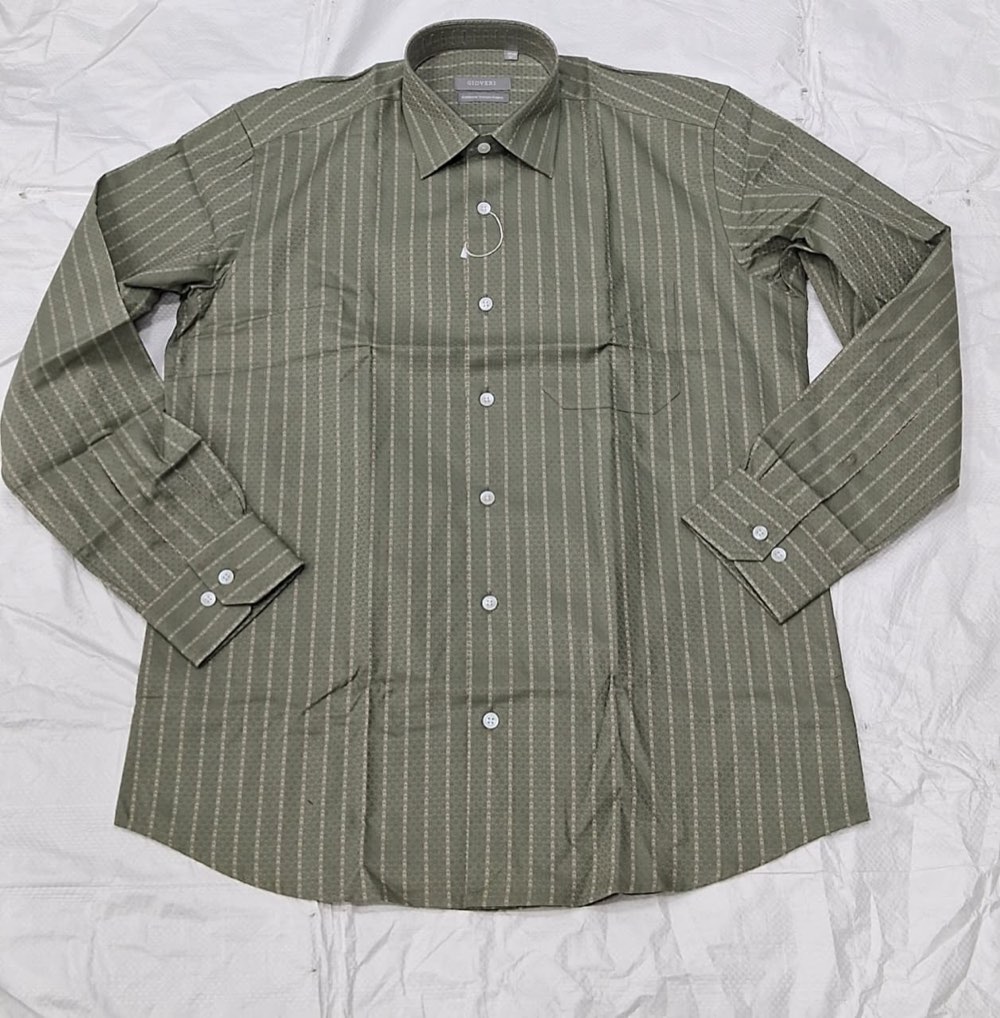
Olive green business shirt with fine light vertical stripes, white buttons and a chest pocket, laid flat

Tailored fit

Chest
2 of 5
Waist
1 of 5
Sleeve
2 of 5

A tailored fit keeps moderate room across the chest and shoulders but draws in at the waist, usually with darts at the back. The result is a defined line without the snugness of a slim cut through the upper body.

Feels
Neat at the belt, comfortable across the shoulders.
Works for
Client meetings, jacket-and-trouser days

Trim, not tight

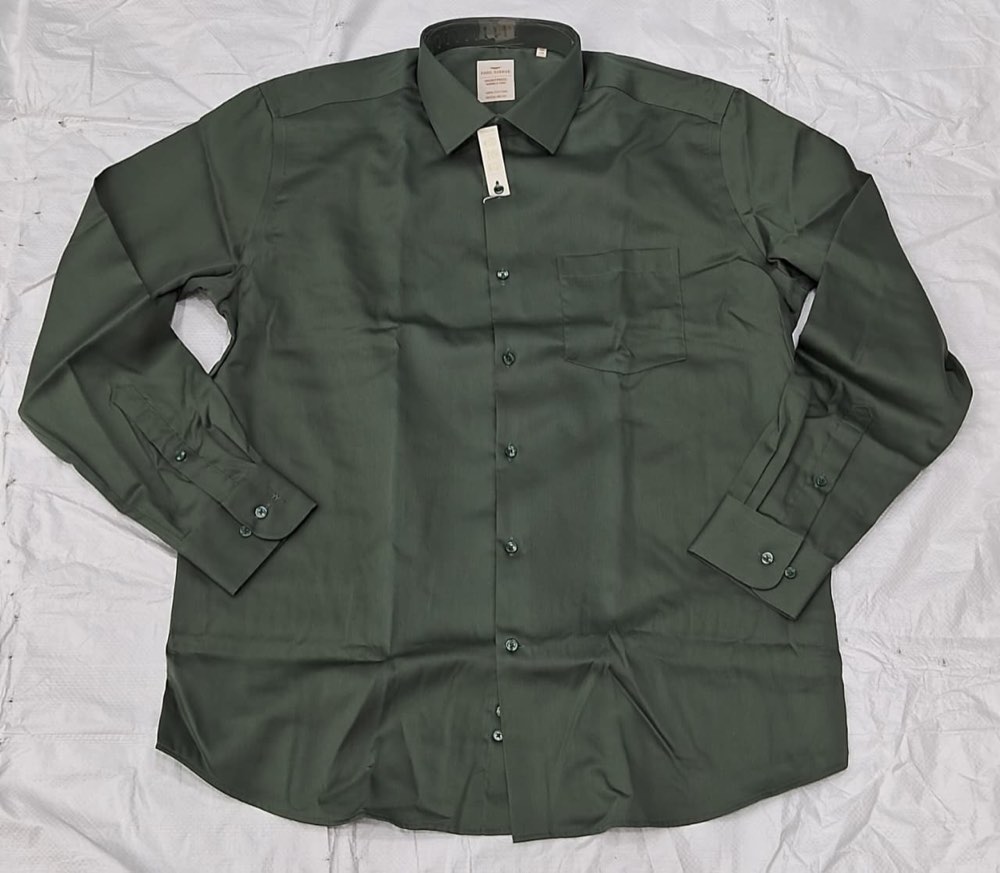
Dark bottle-green solid business shirt with a point collar and tonal buttons, laid flat on white cloth

Contemporary fit

Chest
2 of 5
Waist
2 of 5
Sleeve
2 of 5

Contemporary fit is a modern middle ground: trimmer than the traditional cut, with a gently tapered body and slightly higher armholes, yet more forgiving than slim. It suits people who want a clean outline and still sit at a desk all day.

Feels
Tidy silhouette with an easy feel through the day.
Works for
Everyday office wear, hybrid workdays

The everyday standard

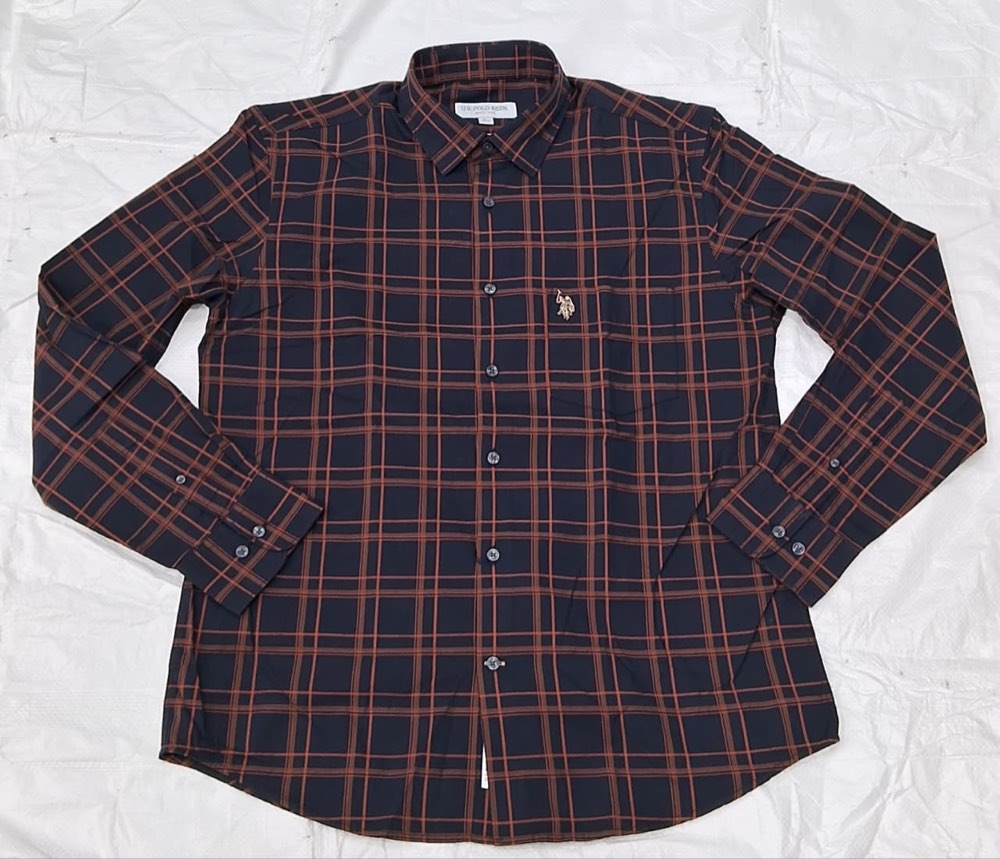
Navy business shirt with a red and tan windowpane check, laid flat on white cloth

Regular fit

Chest
3 of 5
Waist
3 of 5
Sleeve
3 of 5

A regular fit shirt has a straighter body with comfortable ease at the chest and waist and a moderate taper towards the hem. It is the dependable default for long office days, commuting and anyone who prefers room to move.

Feels
Relaxed through the body, still crisp when tucked.
Works for
Daily office routine, long working days

Full and traditional

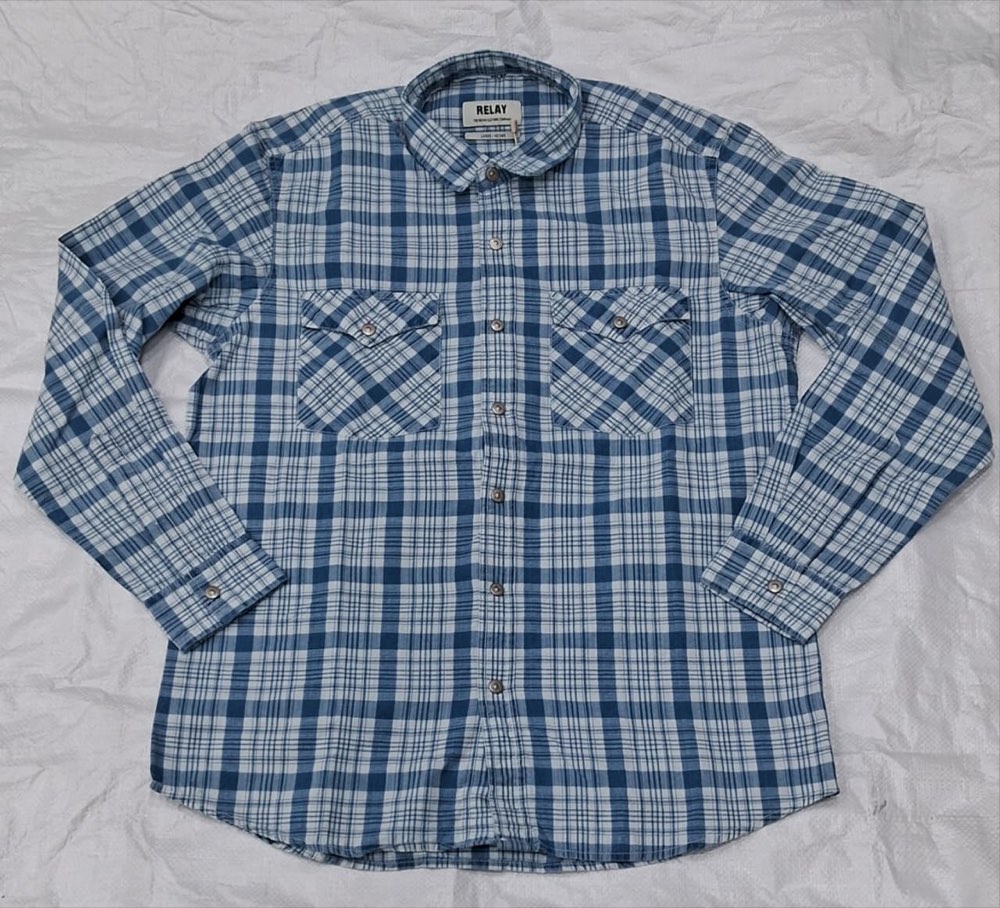
Blue and white plaid shirt with two buttoned flap chest pockets, laid flat on white cloth

Classic fit

Chest
4 of 5
Waist
4 of 5
Sleeve
4 of 5

The classic fit is the most generous of the formal cuts: a fuller chest, straight side seams, lower armholes and often a pleat at the back yoke for reach. It is usually a little longer too, which helps it stay tucked through a full day.

Feels
Roomy and unrestricted; a softer outline.
Works for
Traditional offices, long travel days

Most generous ease

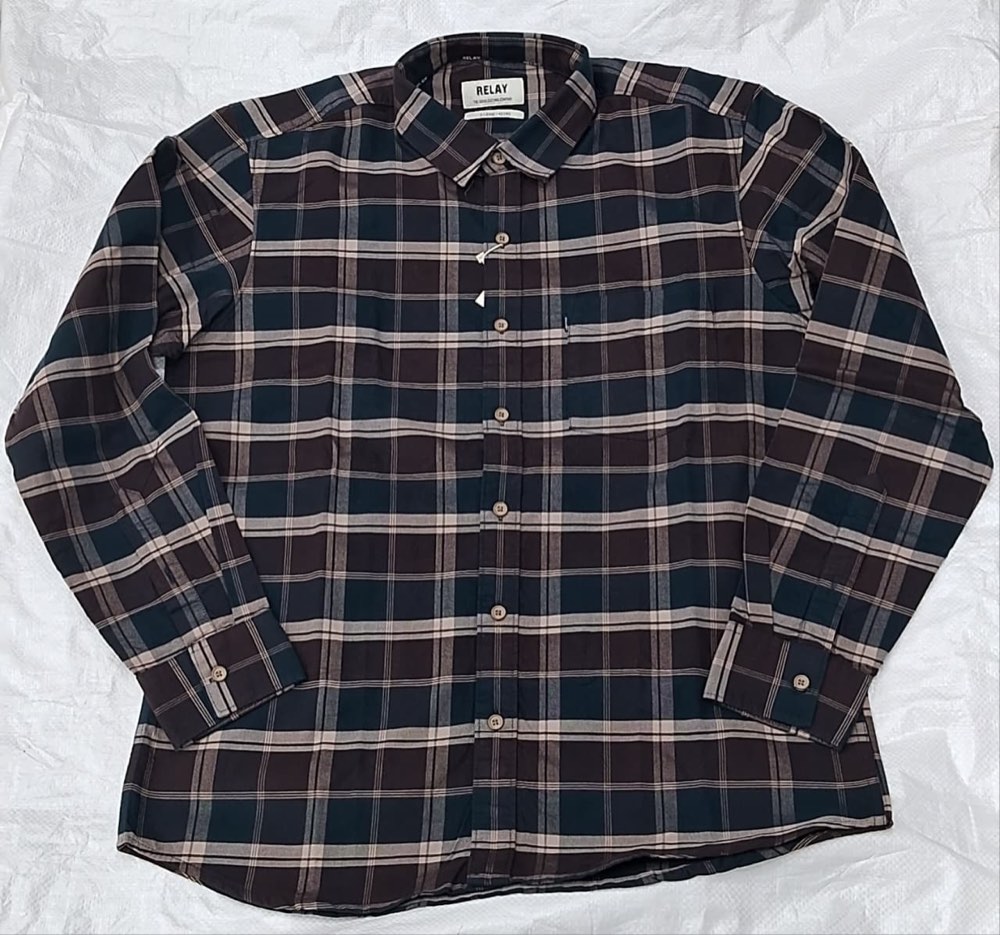
Navy, brown and cream plaid shirt with a button-down collar, laid flat on white cloth

Relaxed fit

Chest
5 of 5
Waist
5 of 5
Sleeve
4 of 5

Relaxed fit offers the most room through the body and sleeves, often with a softer shoulder line and a straighter hem designed to be worn untucked as well as tucked. It belongs to smart-casual days rather than formal settings.

Feels
Easy and airy; the most casual of the six.
Works for
Smart-casual Fridays, travel, weekends

Ease bars are qualitative comparisons between fits, not measurements. Photographs show shirts from the collection laid flat for reference.

02 Zone by zone

Where fit is won
or lost

Whatever the label on the collar, the same nine details decide whether a shirt fits. Read them as three bands of the body.

Band A — Shoulders, collar & chest

A1

Shoulder positioning

The shoulder seam is the anchor of the whole shirt. It should finish at the point where the shoulder bone turns down into the arm. Too far in and the sleeves pull across the upper back; too far out and the shirt looks borrowed, with folds collecting below the shoulder.

A2

Collar comfort

A buttoned collar should close without effort and leave room for one finger. That small margin matters when a tie is knotted, and on humid Mumbai days when a tight collar quickly becomes the first thing you notice. The collar points should rest flat against the shirt front.

A3

Chest ease

Ease across the chest lets you breathe, sit back and reach without the placket opening. Look for a smooth front with no horizontal pulling between buttons. Too much ease shows as vertical folds under the arms that a jacket cannot hide.

A4

Armhole construction

A higher, smaller armhole — common in slim and contemporary cuts — gives more freedom of movement than you might expect, because the sleeve can lift without dragging the body up with it. Lower, larger armholes feel roomy when still but can pull the shirt out of the waistband when you raise your arms.

Band B — Sleeves

B1

Sleeve length

With your arms by your sides, the cuff should reach the wrist bone, roughly where the hand begins. When you wear a jacket, a short band of shirt cuff — around a centimetre — showing beyond the jacket sleeve looks deliberate and tidy. Sleeves that are too short ride up the forearm whenever you gesture; sleeves that are too long bunch above the cuff.

B2

Sleeve circumference

The sleeve should follow the arm with a little room to bend the elbow freely. Slim cuts taper noticeably from bicep to cuff; regular and classic cuts stay fuller. If the sleeve billows when the arm hangs, it is wider than you need; if it tightens when you bend, it is too narrow for daily work.

Band C — Waist, length & tuck

C1

Waist shaping

Shaping comes from back darts or tapered side seams. It removes the excess cloth that otherwise gathers over the belt. A small, even fold of fabric when tucked is natural; a ring of loose cloth around the waist means the shirt is cut fuller than you need.

C2

Shirt length

Business shirts meant to be tucked are cut longer, often with a curved tail at the back, so they stay in place when you sit and reach. Shirts with a shorter, straighter hem are designed to be worn out. The hem shape tells you which one you are holding.

C3

Tucking proportions

A good tuck balances the shirt against the trousers: the waistband sits cleanly, the placket lines up with the belt buckle and trouser fly, and the fabric above the belt is smooth. A tuck that needs constant correction usually points to a shirt that is too short or too full.

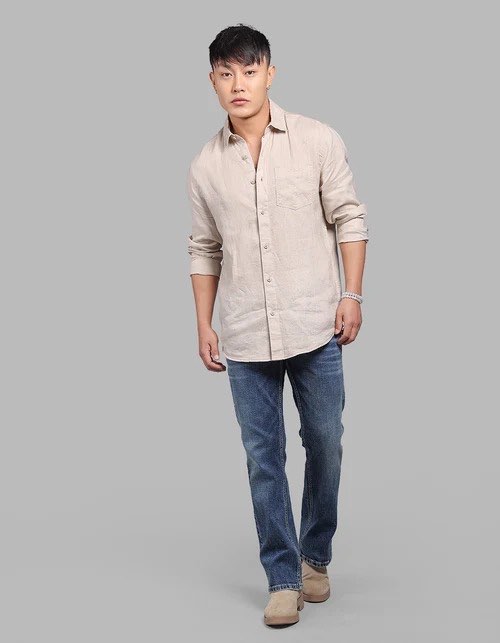
Man walking towards the camera in a beige long-sleeve shirt with rolled cuffs, worn untucked with blue jeans and suede boots
In motion · the shirt moves with the stride, not against it

03 Movement & comfort

A shirt is judged in motion

Standing still in front of a mirror tells half the story. A working day is spent reaching, sitting, turning and walking — and a well-fitted shirt follows every movement quietly.

  1. Reach

    Stretching for a file or a handrail on the commute loads the back and armholes. A back pleat, a well-placed shoulder seam and a higher armhole keep the shirt from pulling.

  2. Sit

    Sitting compresses the waist and lifts the hem. Enough length keeps the shirt tucked; enough waist ease stops buttons straining at the desk.

  3. Turn

    Turning to a colleague or a screen twists the torso and neck. The collar should stay put and the placket should not gape.

  4. Walk

    Walking between meetings, the shirt should hang cleanly from the shoulders, with sleeves that swing freely and a body that does not cling.

Fabric flexibility

Fit and fabric work together. A twill or Oxford cloth has a little natural give; a crisp poplin has less. Cotton blends with a small percentage of elastane add stretch, which makes closer cuts far more comfortable for active days. Soft, washed finishes relax the hand of the cloth further.

Everyday comfort

Comfort is cumulative: a breathable cotton or linen for Mumbai's warm, humid months, a collar that does not chafe, smooth seams inside, and ease where the body bends. A slightly fuller cut also lets air move — useful on long days between air-conditioned offices and the street.

04 Fit & appearance

Clean lines,
free movement

Fit is the quiet signal behind a professional appearance. People rarely notice a shirt that fits; they notice the one that does not — a collar gaping under a tie, cuffs disappearing up the arm, a billow of fabric over the belt, or buttons straining across the chest. Each of these reads as inattention, however good the cloth.

The aim is balance. Too close and the shirt restricts you, wrinkles across the front and wears out at the stress points. Too generous and it looks untidy, especially under a jacket. The right fit sits at the point where the outline looks clean and your arms, shoulders and waist can move without thinking about the shirt.

Too close

  • Pull lines between buttons
  • Sleeves tighten on bending
  • Shirt untucks on reaching

The right fit

Smooth front · flat collar · cuff at the wrist · steady tuck · free reach

Too generous

  • Folds under the arms
  • Fabric balloons over the belt
  • Shoulder seam on the upper arm

Choosing by preference

Fit is personal. Rather than starting from a size chart, start from how you like a shirt to feel and where you will wear it.

You like a close, streamlined outline and wear fitted jackets
Try slim, or contemporary for more room
You want shape at the waist with freedom across the shoulders
Try tailored
You spend long days at a desk and on the move
Try regular or contemporary
You prefer a traditional, unrestricted feel
Try classic
You often wear shirts untucked on smart-casual days
Try relaxed, with a shorter, straighter hem

05 Practical fit assessment

The ten-point
fit check

Wear the shirt buttoned and tucked, with the trousers and belt you would normally wear. Stand in front of a mirror, then move. Tick each checkpoint that passes.

0 / 10 checkpoints passed

Work through each checkpoint while wearing the shirt, ideally in front of a mirror.

Your ticks stay on this page only and are not saved or sent anywhere.

Fit checkpoints

Try the fit in person

Fit is best judged on the body, not on a hanger. If you are looking for business shirts in Andheri or nearby, Options Mall is in Vile Parle West, a short trip from Andheri. Bring the shirt you wear most often and compare its shoulder, sleeve and length against the checklist above.

Next stop · 06Fabrics & Details