Options Mall · Business shirts near Andheri · Vile Parle West, Mumbai

The 9-to-9 09:00 The business day, dressed +91 8369381345

All stops 01—12

+91 8369381345 optionsclothingmumbai@gmail.com

09 / 12 · Styling Guide

A guidebook in 16 lessons

Business Shirt Styling Guide

Business shirt styling explained in plain terms: how to choose the shirt, what goes with it, how to wear it at work and how to care for it. Each lesson ends with a practical example you can use tomorrow morning.

  • Read in order as a short course, or jump straight to one lesson from the chapter rail.
  • Use the practical example at the end of every lesson as a ready-made outfit or routine.
  • Adapt the advice to your workplace dress code and your own comfort. These are guides, not laws.

Part I · Lessons 01–06

Choose

Good styling starts before you get dressed. These six lessons cover the decisions that make a business shirt easy to wear: fit, trouser pairing, pattern, colour, collar and cuff.

Lesson 01 · Choose

Choosing the right business shirt

Choose in this order: fit first, then fabric, then colour and pattern. A plain shirt that fits well looks more professional than an expensive one that doesn't.

For fit, the shoulder seam should sit on the edge of your shoulder bone. You should be able to slip two fingers inside the buttoned collar, and the cuff should reach your wrist bone. The front should lie flat across the chest, with no X-shaped creases pulling at the buttons. Our fits and comfort guide covers slim, regular and tailored cuts in detail.

For fabric, Mumbai's heat and humidity make breathable cotton the sensible default. Poplin is crisp for formal days, twill drapes well and creases less, and Oxford suits relaxed days. The fabric library explains each weave.
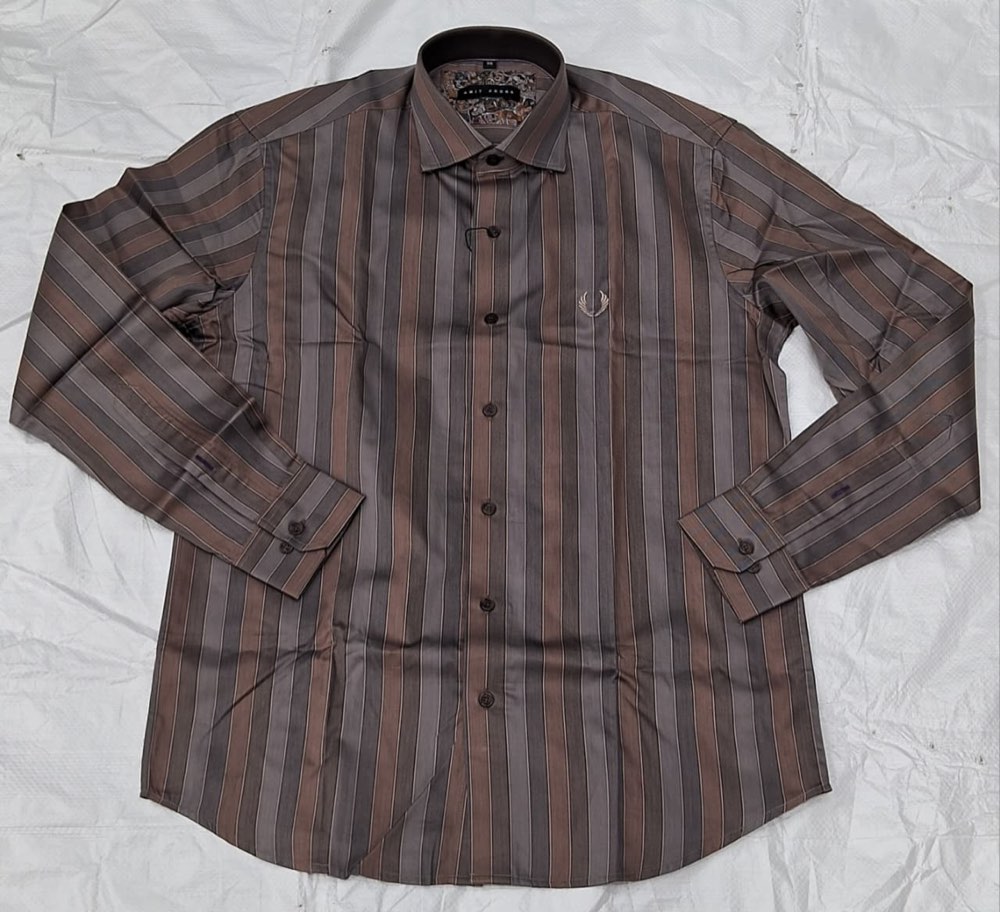
Flat-lay of a long-sleeved shirt in brown, taupe and grey vertical stripes, with a spread collar, a patterned inner collar band, dark buttons and a small embroidered chest emblem
A statement multi-stripe with a spread collar. Shirts like this come after the basics, not before them.

Practical example

Your first shirt for a new job: white or light blue cotton poplin, with a semi-spread collar and single-button barrel cuffs, in the closest-fitting cut that doesn't pull. It goes with every trouser in the next lesson and every tie you already own.
Lesson 02 · Choose

Matching shirts with formal trousers

The principle is contrast in lightness. A light shirt over mid- or dark-toned trousers is the default for business shirts for men. It reads clearly and suits almost every office.

Treat trousers as the anchor. Charcoal, navy and mid-grey cover most working weeks, and beige or khaki lighten the look on relaxed days. A dark shirt does the reverse and needs a lighter trouser. A shirt and trouser in nearly the same shade tend to look flat unless the match is clearly deliberate.

Fabric matters as well. Wool, wool-blend and poly-viscose formal trousers suit a crisp poplin or twill. Cotton chinos sit better with Oxford and small checks. Keep the rise high enough that the shirt stays tucked when you sit.

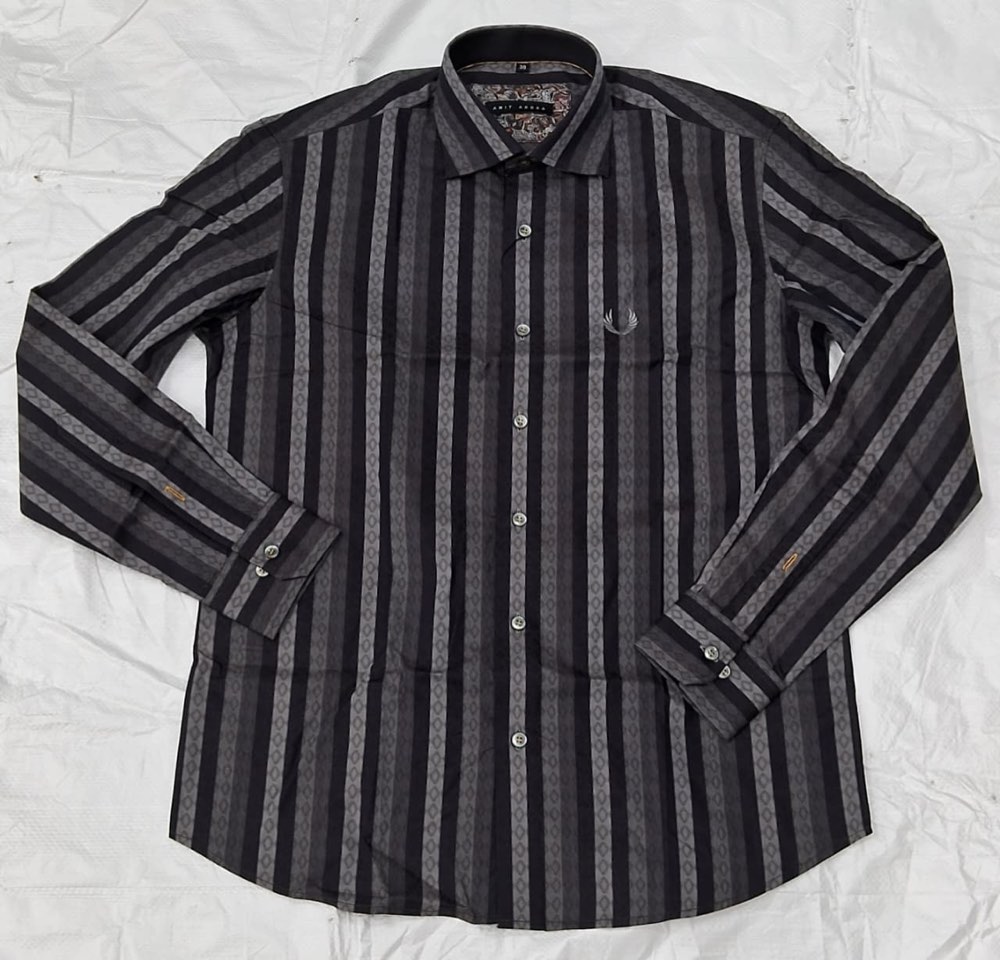
Flat-lay of a black and charcoal shirt with grey jacquard stripes containing a small diamond motif, spread collar with a paisley inner band and pale buttons
A dark jacquard stripe. Wear it with mid-grey or stone trousers rather than black, so the outfit doesn't turn into one dark block.
Shirt and trouser colour pairings: an advisory guide
Shirt / Trouser Charcoal Navy Mid grey Black Beige / khaki
White Classic Classic Classic Works Works
Light blue Classic Classic Classic Works Classic
Pale pink Classic Classic Classic Use care Works
Lavender Classic Works Classic Works Use care
Pale grey Works Classic Use care Works Works
Fine stripe Classic Classic Classic Works Classic
Small check Works Classic Works Use care Classic
Dark shirt Use care Use care Works Use care Classic
Classic: a dependable pairing Works: good with the right tie or shoes Use care: low contrast or a strong mood The exact shade, the fabric and your dress code all change the result.

Practical example

One pair of charcoal trousers, five days: white on Monday, light blue on Tuesday, a fine stripe on Wednesday, pale pink on Thursday and a small check on Friday. All five are "Classic" or "Works" with charcoal, so one good trouser carries the whole week.

Lesson 03 · Choose

Solid versus patterned shirts

Solid shirts are the most formal and the easiest to combine with ties, jackets and trousers. Patterns add interest, but formality drops as a pattern gets larger and more contrasting.

Fine hairline stripes and pinstripes are almost as formal as a solid. Bengal stripes, gingham, mini-checks and tattersall are a step more relaxed. Large checks and plaids are casual shirts.

If you wear more than one pattern, vary the scale. Two stripes of the same width shimmer against each other, while a fine stripe under a bold tie looks intentional. A shared colour links the patterns. Keep to three patterns at most, with at least one solid (usually the trousers) to steady the outfit.

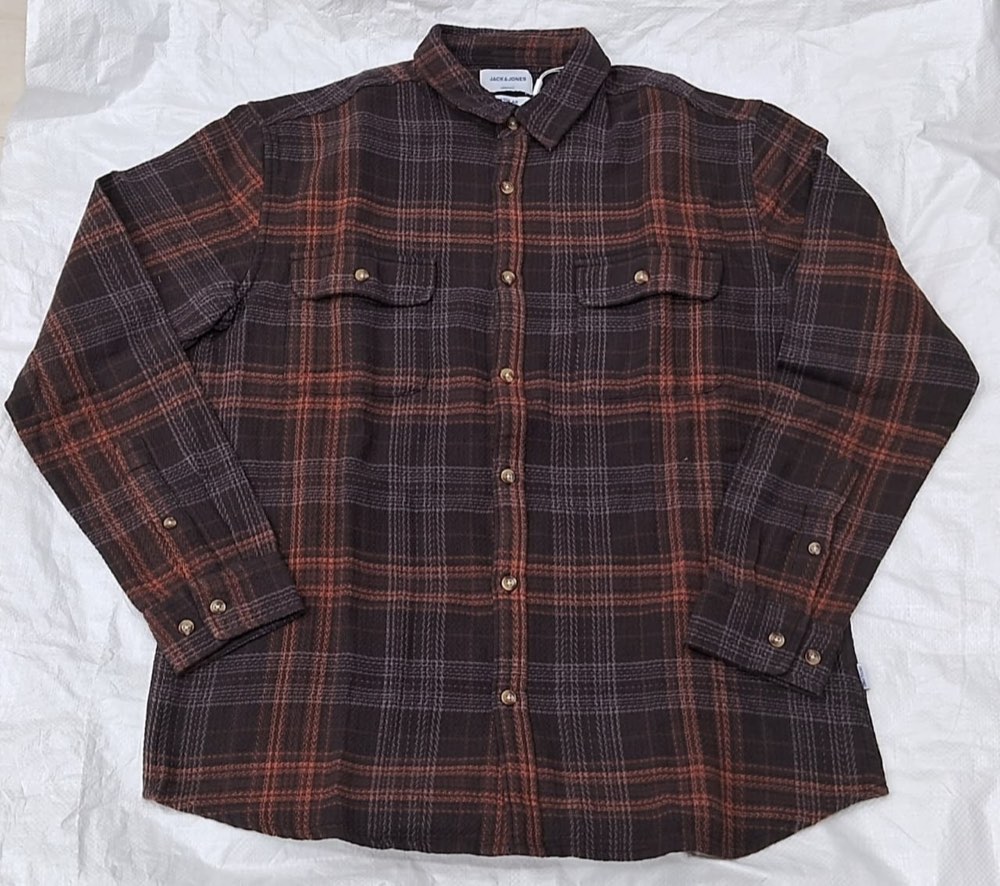
Flat-lay of a dark brown plaid shirt with rust and lilac lines, two buttoned flap chest pockets and metal shank buttons
A large-scale plaid with flap pockets. It shows clearly what a "large" pattern means, and it belongs to the weekend rather than the boardroom.

The scale rule: one small, one medium, one large

Works

Shirt: fine stripe
Tie: medium dot
Jacket: large check

Use care

Shirt: 6 mm stripe
Tie: 6 mm stripe

Same scale, same direction: the two stripes compete and seem to move.

Practical example

Wearing a blue hairline-stripe shirt: choose a navy tie with a medium white dot, add a plain charcoal jacket, and the scale rule is met. If you swap in a striped tie, make its stripes at least three times wider than the shirt's.

Lesson 04 · Choose

Selecting shirt colours

Colour signals formality before anyone notices the cut. White is the most formal and suits every occasion. Light blue is the everyday all-rounder and flatters most complexions. Pale pink and lavender add warmth and sit well with grey and navy. Pale grey is quiet but needs a tie or jacket with some contrast. Ecru and cream lean warm and pair best with browns and beiges.

Navy, charcoal, black and burgundy shirts are smart, but they are more at home in the evening and in business-casual settings than in a formal daytime office.

Choose colour against your face, not the hanger. Hold the shirt under your chin in daylight. A colour that suits you makes your skin look even. One that doesn't can look sallow or drained.

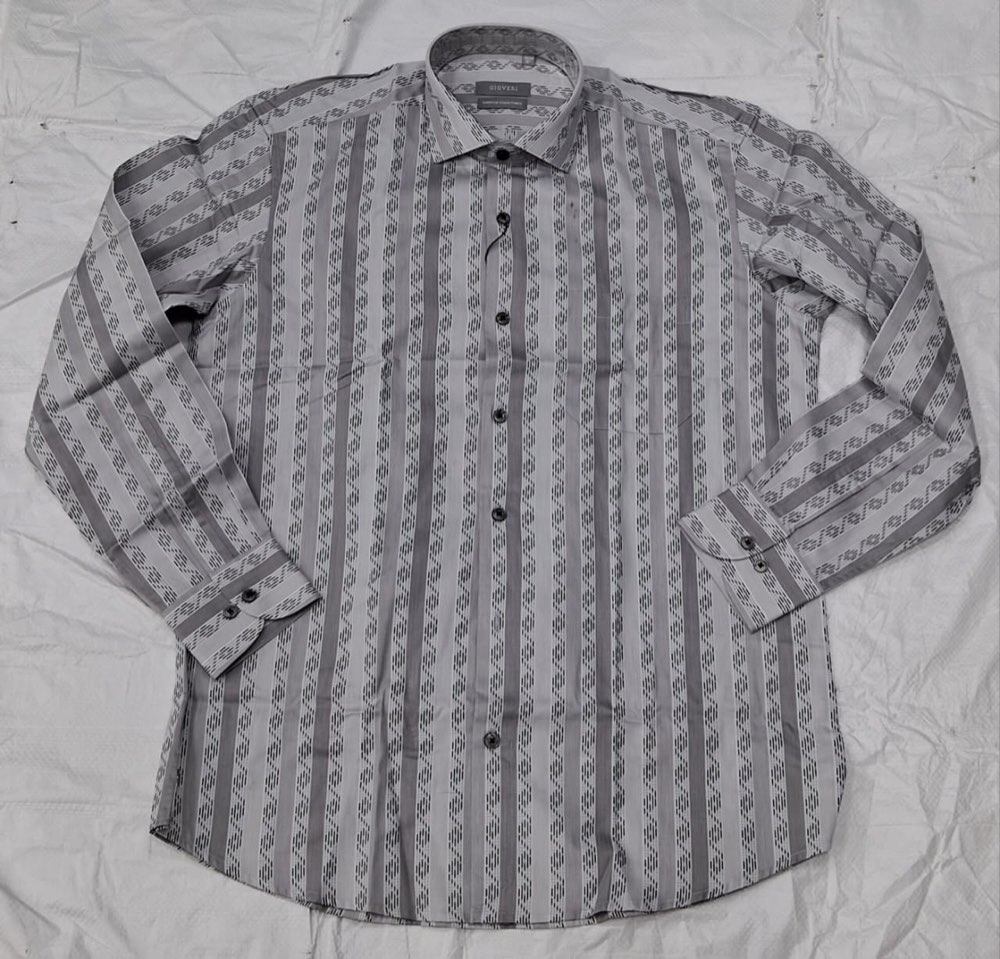
Flat-lay of a pale grey shirt with darker grey vertical stripes and narrow printed motif bands, spread collar and dark buttons
Grey on grey. A quiet neutral that needs a darker tie or jacket to give it definition.
  1. WhiteFormality 5 / 5
  2. Light blueFormality 5 / 5
  3. Pale pinkFormality 4 / 5
  4. LavenderFormality 4 / 5
  5. Pale greyFormality 4 / 5
  6. EcruFormality 3 / 5
  7. Navy / charcoalFormality 2 / 5

Practical example

A client lunch after a morning of desk work: pale pink with mid-grey trousers and a navy tie carried in your bag. It is formal enough for the client, and without the tie it relaxes for the afternoon in the office.

Lesson 05 · Choose

Understanding collar styles

The collar frames your face and decides which tie knot will work. The key measure is the spread, the distance between the two collar points.

Match the collar to the occasion and to your build. A point collar suits a slim knot and helps lengthen a round face. A spread or cutaway balances a longer face and gives a fuller knot room. Collar points should roughly match your jacket lapels: wide lapels look odd above a tiny collar.

Removable collar stays keep the points flat and sharp. Take them out before every wash.

Practical example

One collar for every situation: buy a semi-spread. It takes a four-in-hand or half-Windsor for meetings, sits neatly open at the neck on relaxed days and works under both narrow and medium lapels.

Lesson 06 · Choose

Choosing cuff styles

Cuffs show more than you'd expect: every handshake, gesture and glance at a watch puts them on view. Most professional shirts for men use a barrel cuff, which closes with one or two buttons. The two-button version is a little dressier.

A double (French) cuff folds back on itself and closes with cufflinks. Save it for formal events, evening functions and ceremonies, and wear it with a jacket. A convertible cuff takes either a button or a cufflink.

Fit matters as much as style. The cuff should be snug enough not to slide over your hand. With a jacket on, about 1–1.5 cm of cuff should show below the sleeve.

Practical example

An evening awards function after work: change into a white double-cuff shirt with silver bar cufflinks under a navy suit. Keep the barrel-cuff light blue shirt for the working day.

Part II · Lessons 07–10

Combine

A shirt rarely works alone. These lessons cover what sits around it (tie, shoes, belt and jacket) and the few rules that keep them working together.

Lesson 07 · Combine

Shirt and tie coordination

The classic rule is a tie darker than the shirt. It draws the eye up to the face and reads well in any room.

Pattern follows the scale rule from lesson 03. A solid shirt takes almost any tie. A striped shirt pairs best with a solid, dotted or small-motif tie, or with a stripe that is clearly wider. A checked shirt is easiest with a solid or knitted tie.

Proportion matters as well. Choose a knot to fill the collar: a four-in-hand for point collars, a half-Windsor for semi-spread and spread. Match tie width roughly to lapel width (7–8 cm suits most jackets). The tip should just reach the top of your belt buckle.

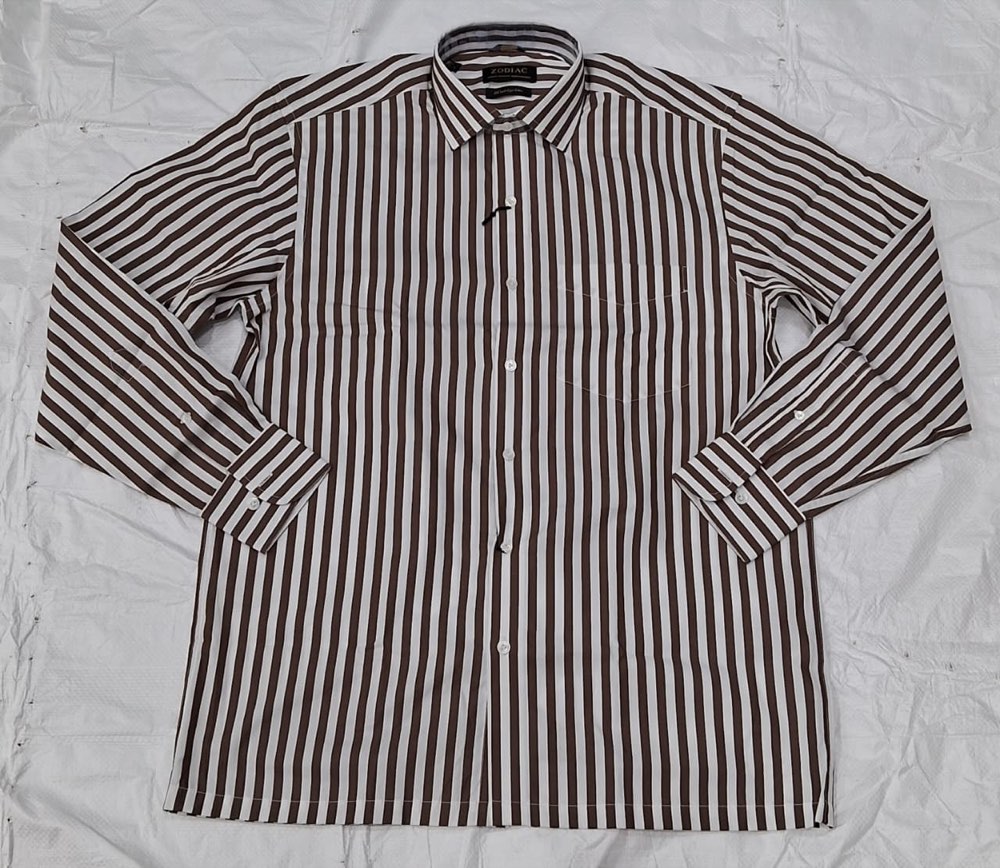
Flat-lay of a white shirt with bold brown vertical stripes, a spread collar, a single chest pocket and white buttons
A bold brown-and-white stripe. A solid tie in deep brown, navy or burgundy suits it better than another stripe.

Practical example

A light blue shirt and three ties: a navy solid for interviews, a burgundy with a small dot for meetings and a brown knit for Fridays. These three cover most ties-required weeks without any clashes.

Lesson 08 · Combine

Footwear combinations

Shoes set the formality of the outfit from the ground up. Oxfords, with closed lacing, are the most formal. Derbies, with open lacing, are more versatile and comfortable for a long day. Monk straps and leather loafers belong to business-casual settings.

Choose shoe colour by trouser. Black is the most formal and suits charcoal, grey and navy. Dark brown is the most flexible, working with navy, grey and beige. Tan and lighter browns are for relaxed days with beige, navy or olive.

Socks should continue the trouser line, so match them to the trouser rather than the shoe, and choose mid-calf length so no skin shows when you sit. In the monsoon, a leather shoe with a rubber sole is the practical choice for city streets.

Do

Polish shoes weekly and let each pair rest a day between wears.

Don't

Wear sports socks or ankle socks with formal trousers.

Practical example

One pair of shoes for a week of business travel: dark brown leather Derbies with rubber soles. They suit navy, grey and beige trousers, survive a rain shower and stay comfortable through airport walks.

Lesson 09 · Combine

Belt coordination

The belt is a short band of colour at the point where shirt meets trouser, so it is noticed more than its size suggests. The rule is simple: match the belt leather to the shoe leather, both in colour and roughly in finish. Pair polished with polished and suede with suede.

For formal trousers, choose a belt about 3–3.5 cm wide with a slim, plain frame buckle. Wider belts and large logo buckles belong with jeans. The buckle metal can echo your watch case or cufflinks, though this is a refinement rather than a requirement.

Fit is easy to check: the buckle should close on the middle hole, and the tail should reach the first belt loop without passing it. Trousers with side adjusters or braces need no belt, and you should never wear both a belt and braces.

Do

Own a black and a dark brown belt in the same plain style, so you always have a match.

Don't

Wear a tan belt with black shoes, or a worn, cracked belt with a crisp shirt.

Practical example

White shirt, navy trousers, dark brown shoes: add a dark brown leather belt with a brushed silver buckle. If you change into black shoes for an evening event, change the belt too.

Lesson 10 · Combine

Jacket layering

Layering works through steps of contrast: a dark jacket over a light shirt, with the tie somewhere in between. If the jacket is patterned, keep the shirt solid. If the shirt is patterned, keep the jacket plain.

Check the visible edges. About 1–1.5 cm of shirt collar should show above the jacket collar at the back of the neck, and the same amount of cuff at the wrist. A shirt that billows at the waist bunches under a jacket, so a slim or tailored fit layers more cleanly.

In Mumbai's climate, unlined or half-lined jackets in cotton, linen blends or lightweight wool are far more comfortable. Many professionals carry the jacket and put it on for the meeting itself.

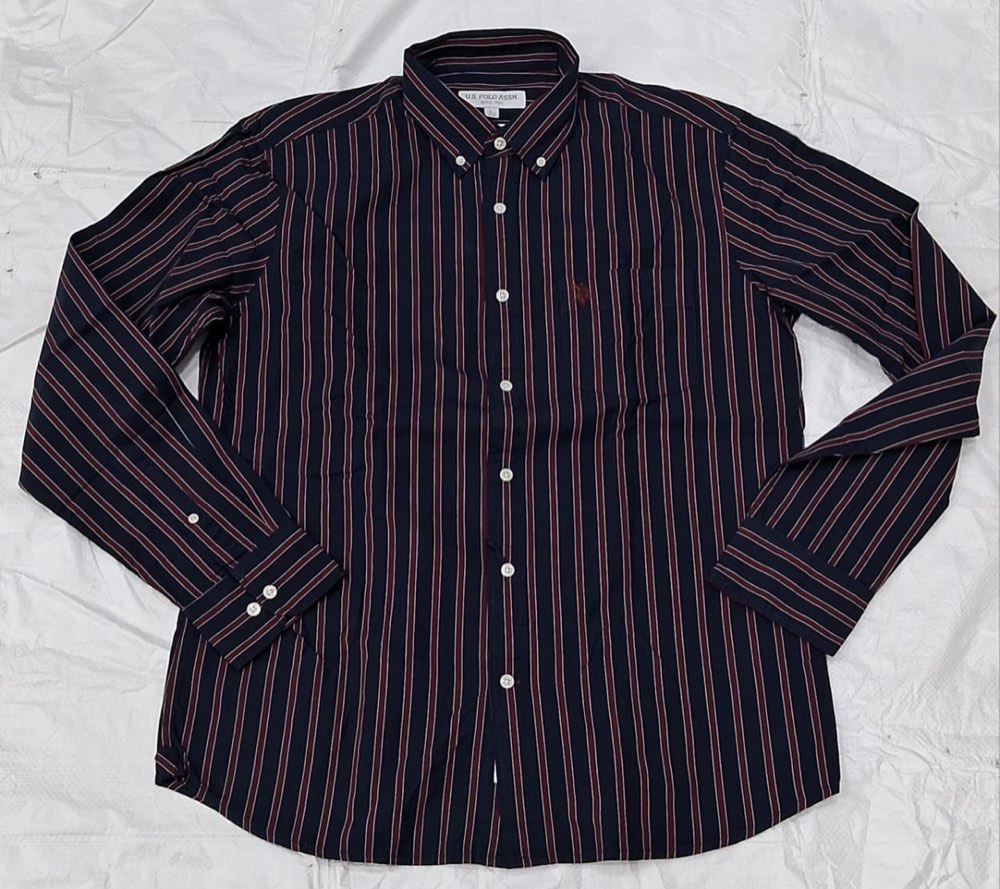
Flat-lay of a dark navy shirt with burgundy and white vertical stripes, a button-down collar and white buttons
A navy stripe with a button-down collar. It works under a mid-grey or tan unstructured jacket for smart-casual days, with no tie.
The contrast ladder runs from light to dark: light shirt (white, light blue), mid-tone tie (burgundy, mid-blue), dark jacket (navy, charcoal). Keep each layer a clear step apart.

Practical example

A navy blazer you already own: wear it with a light blue shirt, mid-grey trousers, a burgundy tie and dark brown shoes. Each layer is one step darker than the last, from shirt to tie to jacket.

Part III · Lessons 11–13

Wear

How to put the first two parts to work: reading your workplace, dressing for the moments that count and building a set of shirts that covers all of them.

Lesson 11 · Wear

Styling shirts for office environments

Offices across Mumbai range from formal banking floors to start-up studios, and the same shirt can look right in one and stiff in the other. Notice what senior colleagues wear on an ordinary Tuesday. In your first weeks, dress one step above the office average until you know where the line sits. The office dressing guide goes into each setting in more depth.

Most formal

Corporate formal

Banking, law, consulting and client-facing roles. Solid or fine-stripe formal shirts in white and light blue, a tie, a dark suit or jacket and black or dark brown Oxfords.

Middle ground

Business casual

Most offices today. No tie and the top button open. Small checks, Oxford cloth and soft colours, with formal trousers or chinos, Derbies or loafers. Keep a jacket nearby.

Most relaxed

Creative and hybrid

Studios, tech teams and work-from-home days. Textured fabrics, darker colours and band or button-down collars. The shirt should still be pressed and well fitted, because relaxed doesn't mean careless.

Practical example

A hybrid week: on office days, wear a light blue Oxford with navy chinos and brown Derbies. At home on video, a solid mid-blue shirt looks smart from the chest up. On the client day, wear a white poplin shirt with a tie and charcoal trousers.

Lesson 12 · Wear

Styling for presentations and meetings

When people are watching you speak, the shirt should support you without drawing attention. Choose a solid or very quiet pattern. Tight, fine checks and narrow stripes can flicker on camera and projector feeds, an effect called moiré. Bright white can glare on some webcams, which makes light blue or a soft mid-tone a safer choice on video.

Think about movement too. Raising an arm to point at a screen pulls a short shirt out of the waistband, so choose a longer tail and a fit with room across the back. Under stage lights or on a humid Mumbai afternoon, breathable cotton and a mid-tone hide perspiration better than pale grey. A V-neck undershirt close to your skin tone stays invisible beneath an open collar.

Run through the pre-presentation check in a mirror ten minutes before you begin.

Practical example

A quarterly review, presented in person and streamed: a solid light blue twill shirt (twill resists creasing while you sit), a navy tie, a charcoal jacket kept on, and a pressed spare shirt in your bag in case the commute goes badly.

Lesson 13 · Wear

Building a versatile business wardrobe

A versatile wardrobe comes from shirts that work with each other's trousers, ties and jackets, not from owning many shirts. A rotation of five covers a working week. Seven lets each shirt rest and leaves a full set in hand on laundry day.

Build in the order shown below. The first two cover the most formal occasions, the next three add variety without losing formality, and the last two stretch the wardrobe into business casual and evenings. Only then is it worth adding statement shirts such as bold stripes and larger checks.

Before buying, check each new shirt against what you own. If it works with at least two of your trousers and one jacket, it earns its place.

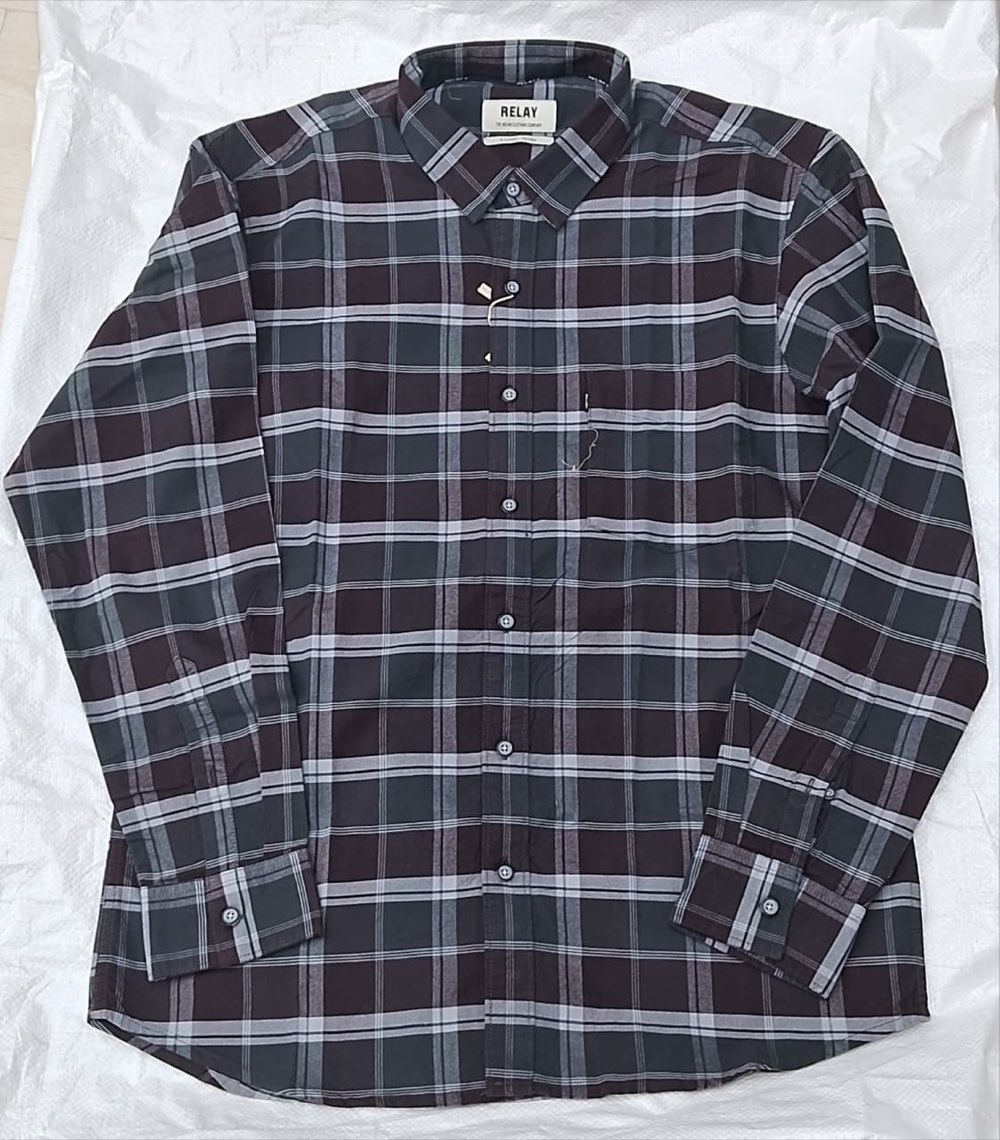
Flat-lay of a burgundy, charcoal and grey windowpane check shirt with a single chest pocket and grey buttons
A burgundy and charcoal check. A good extra for Fridays and travel, once the core seven are in place.
The 5-to-7 shirt rotationCore fiveExtend to seven
  1. 01 · Core White poplin The formal anchor Pairs: Interviews, board meetings, any tie
  2. 02 · Core Light blue The everyday workhorse Pairs: Navy, grey, charcoal, beige
  3. 03 · Core Fine stripe Pattern that stays formal Pairs: Solid or dotted ties
  4. 04 · Core Small check Relaxed office days Pairs: Navy or beige trousers, no tie
  5. 05 · Core Pink or lavender Soft colour Pairs: Charcoal and mid-grey
  6. 06 · Extend Textured Oxford Business casual, travel Pairs: Chinos, unstructured jacket
  7. 07 · Extend Darker evening shirt After-work events Pairs: Grey or beige trousers

Practical example

A starter budget for two shirts: buy white and light blue in the same fit and fabric. Add the fine stripe next month and the small check the month after. By the fifth purchase you have a full working week, and every shirt still goes with charcoal and navy.

Part IV · Lessons 14–16

Care

Well-kept shirts look newer for longer. These three lessons cover daily care, washing and ironing, and storage, with particular attention to Mumbai's humidity.

Lesson 14 · Care

Caring for business shirts

Most shirt damage happens in small daily habits, not in the washing machine. Unbutton fully before taking a shirt off, including the collar, cuffs and any button-down points. Pulling it over your head strains buttonholes and stretches the collar.

In a humid climate, wash office shirts after every wear. Sweat and skin oils set into collars and cuffs within a day or two. Read the care label before anything else, and remove collar stays before washing so they don't bend or mark the fabric.

Let deodorant dry fully before you dress. Antiperspirant residue, combined with sweat, is a common cause of yellowed or stiff underarms on white shirts. Rotating shirts gives the fibres time to recover between wears.

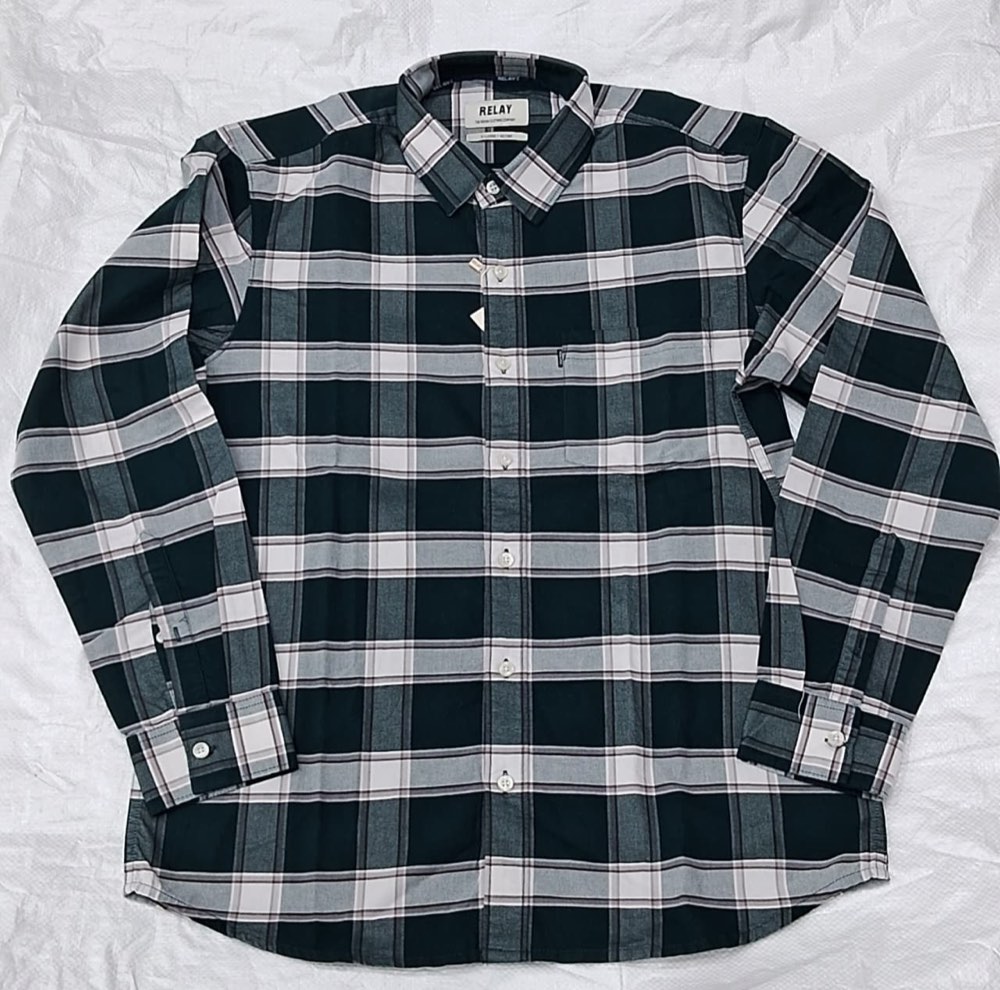
Flat-lay of a bottle-green and white large check cotton shirt with a chest pocket and white buttons
A deep green and white check. Strong colours like this keep their depth longer when washed inside out in cool water.

Do

Treat collar and cuff marks with a little liquid detergent before washing.

Don't

Leave a worn shirt crumpled in a bag overnight. Hang it to air until wash day.

Practical example

An evening routine that takes two minutes: unbutton the shirt, take out the collar stays and put them in a small dish, rub detergent into the collar line, and hang the shirt on its own hanger to air until wash day.

Lesson 15 · Care

Washing and ironing considerations

Washing: separate whites, lights and darks. Turn dark and strongly coloured shirts inside out. Use a gentle cycle at 30–40 °C with a low spin, and don't overload the drum: crowding creates creases and leaves dirt behind. Hang shirts on a hanger to dry with the top button fastened so the collar keeps its shape, and keep them out of harsh direct sun, which fades colour.

Ironing: iron while the shirt is still slightly damp, at the heat its label allows. Easy-care and non-iron finishes need a lower setting. Iron around buttons, not over them. A handheld steamer is good for touch-ups before a meeting, but it won't give a collar the crisp finish of an iron.

Care-label symbols explained in plain text

  • Machine wash, 30 °C maximum The number is the highest water temperature. Most cotton business shirts are comfortable at 30–40 °C.

  • Wash at 40 °C, gentle cycle One bar under the tub means a reduced, gentler spin; two bars mean a very gentle wool or delicate cycle.

  • Do not bleach A crossed triangle rules out chlorine and oxygen bleach. Check this before treating a white collar.

  • Tumble dry, low heat One dot inside the circle means low heat. Two dots allow normal heat.

  • Do not tumble dry Line-dry on a hanger instead. Common on shirts with stretch or a finish that heat can damage.

  • Iron at medium heat Two dots: around 150 °C. Typical for cotton blends and easy-care finishes.

  • Iron at high heat Three dots: around 200 °C. Usually seen on pure cotton and linen.

  • Professional dry clean The letter inside the circle tells the cleaner which solvent to use. A crossed circle means no dry cleaning.

Practical example

Sunday evening ironing for the week: wash on Saturday at 30 °C with a low spin, hang the shirts on hangers to dry, then iron all five on Sunday while they are still a little damp. Fifteen minutes per shirt soon becomes eight.

Lesson 16 · Care

Shirt storage and maintenance

Store business shirts on shaped wooden or padded hangers that match the width of your shoulders. Thin wire hangers leave bumps at the shoulders. Fasten the top button and one in the middle so the front hangs straight, and leave a finger's width between shirts so they don't crease each other.

Mumbai's monsoon humidity is the main threat to stored shirts. Keep the wardrobe ventilated, open it on dry days, and add moisture absorbers or cedar blocks. Don't store shirts in plastic dry-cleaning covers, which trap damp and can cause mildew and yellowing.

Keep up with small repairs. Sew on loose buttons straight away using the spare usually stitched inside the placket or side seam, replace bent collar stays, and retire a shirt once its collar edge starts to fray.

Do

Hang the week's shirts in wearing order so the rotation runs itself.

Don't

Pack shirts tightly into a damp cupboard during the monsoon.

Practical example

A monsoon wardrobe reset in June: swap wire hangers for wooden ones, remove any plastic covers, put two moisture absorbers in the wardrobe, and sew back the button you've been meaning to fix.

Next stop · 10Businesswear Journal